BCBA Descriptive Statistics: Exam Prep Essentials
Preparing for BCBA? Master descriptive statistics in ABA: mean, median, mode, variability, and skewed data interpretation. Excel in exam prep!

By Praxis Notes Team Editorial team
Published 7 min read
On this page
In Applied Behavior Analysis (ABA), data often reveals unpredictable client patterns, making BCBA descriptive statistics a key skill for spotting trends and acing the certification exam. As a BCBA candidate, expect questions on central tendency and variability from the BCBA Task List, such as A.1 (description, prediction, control) and F.7 (interpreting assessment data). These methods summarize behavioral data, highlighting patterns to shape interventions without altering variables.
This guide covers core ideas with exam-ready examples from trusted sources. You’ll explore central tendency measures, reasons to choose median over mean in skewed cases, variability tools, their fit with visual analysis, and use in clinical reports. At the end, apply these stats confidently to ABA situations.
Introduction to Descriptive Statistics in ABA
Descriptive statistics build the base for ABA data work. They let BCBAs sum up and make sense of behavioral observations in a clear way. The Behavior Analyst Certification Board stresses that good description means spotting observable behavior facts, which aids prediction and control in treatments, as noted in the BACB’s 2022 outline BACB (2022).
In ABA, these stats measure things like response rates or error patterns from direct views. This keeps choices tied to solid evidence. Unlike tools that predict beyond the data, descriptive ones stick to what’s observed. They’re perfect for single-subject setups in ABA.
For example, in functional behavioral assessments (FBAs), BCBAs apply them to outline antecedent-behavior-consequence (ABC) patterns. This cuts down on bias in judgments. For your BCBA exam prep, grasping these basics helps you check data steadiness and steer ethical treatments.
BCBA Descriptive Statistics: Measures of Central Tendency in ABA
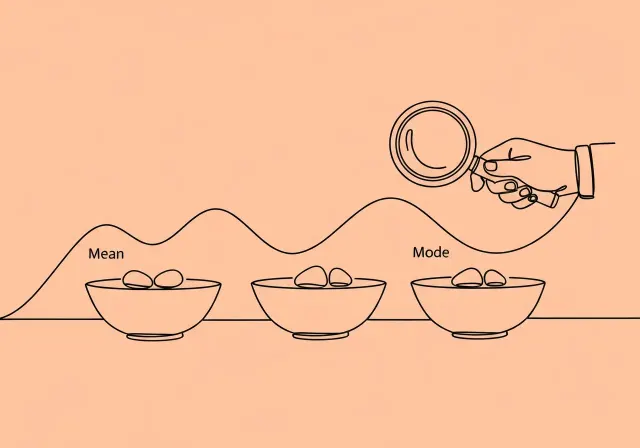
Central tendency points to the usual value in a data set. It’s vital for outlining behavioral baselines in ABA. The main ones—mean, median, and mode—give different views, especially with frequency data from sessions.
The mean, or simple average, adds up values and divides by the count. In ABA, it works well for even data, like weekly mand rates. Yet outliers can skew it, such as one busy day throwing off intervention checks, as explained by Harvard resources on stats basics Harvard ExAC (n.d.).
The median finds the middle spot in a sorted list. It splits data evenly. This suits ordinal info, like compliance ranks in sessions. Take scores of 2, 4, 5, 7, and 10—the median is 5. The high 10 doesn’t shift it.
The mode shows the most common value. It’s great for category data in ABA, like top reinforcers. In error types from discrete trial training—three “tact” and two “intraverbal”—the mode is “tact.” In even data, all three measures match, showing normal spread, per Purdue OWL guidance Purdue OWL (n.d.).
- Mean median mode ABA uses: Mean for steady trends in baselines, median for ranks, mode for common behaviors.
- Exam tip: Pick based on data—mode for nominal, mean for interval.
These aid clear talks in team huddles or reports. They tie to BACB Ethics Code goals.
The BCBA’s Choice: Using Median Over Mean When Handling Skewed Data
Skewed data pops up often in ABA from uneven client replies. It tests central tendency picks. For interpreting skewed data, switch to median from mean to dodge wrong ideas. This is crucial for BCBA exam data sections.
In right-skewed sets, the tail stretches high. This pulls the mean up. Say mand counts of 1, 2, 3, 10, and 15. Mean is 6.2, but median is 3. It shows true norms better if one session had extra drive. Left-skew does the reverse—mean drops from low outliers.
BCBAs lean on median and mode for skewed info. They shrug off extremes for true baseline views, as Khan Academy details Khan Academy (n.d.). In skill graphing, skew might hint at issues like tiredness. Median cuts through to real paths.
Spot skew by:
- Graphing values—check if mean sits away from median and mode.
- Sorting and comparing; big gaps signal skew.
In ABA single-subject work, median guards against reactivity or bias. Pair it with BCBA Visual Analysis of Data: Exam Prep Essentials for graphing links.
BCBA Descriptive Statistics: Measures of Variability in ABA
Variability shows data scatter. It helps BCBAs gauge behavior steadiness for planning. Data variability measures—range, standard deviation (SD), and interquartile range (IQR)—check if baselines suit change.
Range takes highest minus lowest. It’s a fast check. In ABA, tight range like 4-6 responses means steady. Wide like 2-12 holds up interventions for wobble, per Harvard stats overview Harvard ExAC (n.d.).
SD tracks average drift from mean. Low numbers mean close groups. For normal data, 68% fit in one SD. In ABA, use it for latencies—SD of 2 seconds means solid timing for fading prompts.
IQR covers middle half (Q3 minus Q1). It skips edges. Best for skewed ABA data like tantrums, where big bursts don’t hide norms. Mild outliers are 1.5-3 IQR out; extremes over 3, as Khan Academy covers Khan Academy (n.d.).
- Range for quick session notes.
- SD for interval tracking.
- IQR for skewed clinical sets.
Pair with central tendency. High spread and steady mean may need setting fixes. See Data Stability vs Variability in ABA: A Guide for BCBAs for steadiness tips. Also check BCBA Experimental Design Study Guide: Master Domain D for design fits.
Applying Descriptive Statistics to Visual Data Interpretation: Level and Trend
Visual analysis blends descriptive stats into graph reviews in ABA. It eyes level, trend, and variability for function ties. BCBAs apply this to single-subject setups, per BACB Task List on designs.
Level notes baseline height or average. Use mean or median. A jump post-treatment—like compliance from mean 3 to 8—shows impact. Average stable phases, skip early wobble.
Trend shows path over time—up, down, or mixed. Median smooths skewed trends. Dropping medians of 5, 4, 3 in issues back treatment wins. Variability adds: Low spread boosts trend trust.
Mix in data variability measures. Add SD lines to trends for steadiness views. High scatter can hide paths, so gather more data, as Artemis ABA suggests Artemis ABA (2024). Exams test graphs with steady level but rising trend as speedup signs.
Steps:
- Mean or median for phase levels.
- Trend direction plus variability like IQR.
- Phase compares for repeats and ethics.
This boosts ABC graph predictions on functions.
Documenting and Interpreting Descriptive Data for Clinical Decisions
Solid documentation of descriptive stats backs data-led ABA work. BCBAs note central tendency and variability in reports, matching BACB rules for clear results.
Pick metrics first: Mean for even acquisition graphs. Median and IQR for skewed issue logs. View as a whole—a 70% median compliance with SD of 2% means mastery. Time for generalization tests.
In choices, stats steer tweaks. Wide range flags uneven delivery, so train RBTs. Note sources like “Mean mand rate: 5.2 (SD=1.1) over 10 sessions” for audits or IEPs.
ABA small samples challenge; use graphs and repeats to fight. For exams, read skewed sets where median tops mean—hints at positive bursts from rewards.
- Select mean for symmetric data summaries.
- Use median/IQR for outlier-heavy logs.
- Interpret with visuals for full context.
- Document variability to spot implementation gaps.
Ethics warn: Don’t lean too hard on numbers alone. Add qualitative notes for full pictures, as BACB (2022) guides BACB (2022). This fosters trust and skill.
Frequently Asked Questions
How do you interpret skewed data in ABA?
Skewed data comes from uneven acts like rare tantrums in ABA. Spot right skew when mean beats median—outliers boost averages. Pick median and IQR to cut distortion, following Khan Academy tips. In mand data skewed by drive peaks, median forecasts norms better for baselines Khan Academy (n.d.).
What are the key differences between mean and median in descriptive statistics?
Mean sums all and averages—outliers hit it hard. It’s best for even ABA data like steady rates. Median takes the middle in sorted lists, skipping edges. It fits skewed logs common in behavior work. For exams, use mean on interval without skew; median on ordinal with outliers, as Harvard resources note Harvard ExAC (n.d.).
How can variability measures like standard deviation and IQR be used in ABA?
SD measures mean drift for normal sets—key for reply steadiness in ABA, like SD under 2 for latencies. IQR eyes middle half, suiting skewed errors. BCBAs use them for treatment checks; low values mean fade-ready, per Purdue OWL Purdue OWL (n.d.). They aid visual single-subject work.
What role do antecedents play in descriptive assessments?
Antecedents come before acts in ABC logs, a descriptive ABA tool. They spot patterns to guess functions, like demands sparking escapes. BCBAs read via conditional odds (say, 0.5 chance post-antecedent), aiding FBAs sans changes, as BACB task F.7 says BACB (2022).
How do you calculate and interpret conditional probabilities in ABA?
Divide behavior hits under conditions by total chances (e.g., 8/10 demands to escape = 0.8). Values near 1.0 point to strong ties, like attention bids, indicating robust associations in functional links Iwata et al. (2013). Read in ABC descriptive data to focus treatments. This boosts FBA predictions NC-ABA (2017).
What is visual analysis in ABA data interpretation?
Visual analysis checks level (height average), trend (path), and variability in graphs for treatment reads. Use mean for level, SD for spread—shifts show effects. It’s key to BCBA ethics for fair calls, like in Artemis ABA notes Artemis ABA (2024).
BCBA descriptive statistics turn raw data into useful insights. They boost client results and exam wins. From skewed picks to visual variability, these ensure exact, ethical BACB work. Favor median for ABA ups and downs. Check with varied metrics for strong baselines.
Key takeaways:
- Use mean for even data, median for skew to keep baselines true.
- Pair variability like IQR with trends for reliable visuals.
- Document stats clearly to back clinical and ethical choices.
- Practice interpreting graphs with central tendency for exam edge.
- Always blend numbers with ABC context for full FBA views.
Next steps: Try sample graphs with mean, median, IQR on 10-session sets. Tackle exam trend questions with variability. Review BACB tasks for ties. Log progress in notes for real practice. This solid method preps you for certs and sharpens clinic skills.