
Essential BCBA Documentation for Multidisciplinary Teams
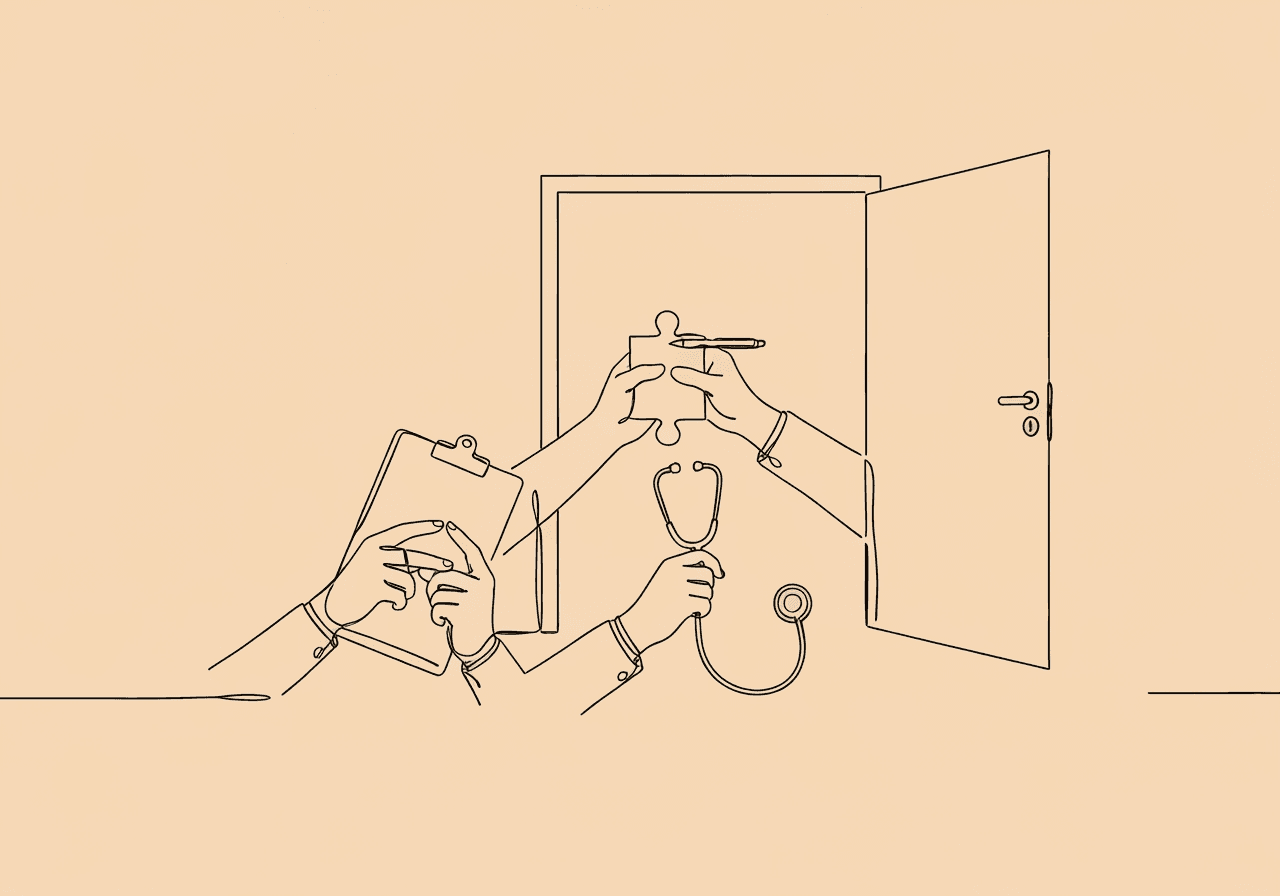
Essential BCBA Multidisciplinary Documentation for Teams
With autism affecting more kids than ever, treatments like Applied Behavior Analysis (ABA) play a key role. Recent surveys show ABA is used by about 36.5% of children with autism spectrum disorder. As reported by the Centers for Disease Control and Prevention (CDC) (2023 data), roughly 1 in 36 U.S. children has autism. This underscores the need for integrated services, blending ABA with occupational therapy (OT) and speech therapy (ST).
For Board Certified Behavior Analysts (BCBAs), team-based ABA records form the backbone of ethical work. They promote coordinated care, safeguard client privacy, and aid billing success. Proper collaborative notes help avoid gaps in treatment and build stronger team trust.
Here are 3-5 key takeaways to guide your practice:
- Always secure consent before sharing records with other providers.
- Use objective data to link ABA goals with OT or ST inputs.
- Document consultations within 24-72 hours for accuracy.
- Align shared goals using SMART criteria to prevent overlap.
- Regularly review records against BACB and CPT standards.
This guide covers why collaborative documentation matters, core BACB and CPT rules, hands-on steps for notes, tips on shared goals and overlap, plus a practical checklist. It also includes FAQs to tackle common issues. You'll gain tools to simplify your workflow while meeting professional expectations.
Why Is BCBA Multidisciplinary Documentation Essential?
Teams in ABA environments combine varied skills to meet clients' complex needs, especially for those with autism. Studies from the National Institutes of Health (NIH) (2024) point out that blending ABA, OT, and ST can boost communication and daily skills by up to 89% in coordinated setups. Yet, without strong coordination of care documentation, groups face scattered efforts, repeated work, or ethical slips.
BCBAs need to record exchanges to show responsibility under the BACB Ethics Code. It calls for honest logs that aid ongoing care. In team settings, sharing updates or plan tweaks builds reliability and streamlines tasks. For example, when ABA and ST both target verbal skills, precise entries stop overlap and keep everyone in their lane.
Skipping solid records might trigger claim rejections or reviews. The ABA Coding Coalition (2023) notes that weak ABA collaboration requirements entries cause 20-30% of billing problems in team cases. With thorough, HIPAA-safe files, you comply with rules and drive better client gains via smooth team talks.
What Are the Key BACB and CPT Rules for Coordination of Care Documentation?
The BACB Ethics Code (2022) demands precise, prompt records of services, choices, and team work, all while protecting privacy. Section 2.09 requires logging pro talks only with okay from clients. This covers team sessions, joint ideas, and reasons for ABA steps.
On the billing side, CPT code 97155 fits BCBA-led protocol tweaks. American Medical Association (AMA) guidelines (2024) say notes must list dates, times (in 15-minute blocks), protocol changes, client reactions, and proof for shifts. Say an OT tip leads to sensory plan changes—your entry must tie it to goals and show your role.
Coordination of care documentation here needs summaries on hours, trackable aims, and family roles. The UnitedHealthcare ABA Program Description (2023) highlights adding function checks and exit plans. Miss this, and claims fail. Without data on tweaks, 97155 won't fly, falling back to lower-pay 97153.
You might find it helpful to cross-check the BACB code for ethics and AMA guide for codes. For more on ethics, see our guide: BCBA Ethical Documentation Best Practices.
How Can BCBAs Document Multidisciplinary Consultations Effectively?
Start with formats like SOAP notes, tailored for collaborative ABA records. Subjective part notes family or team views on behaviors. Objective covers hard facts, like "Client hit 80% on social trials with ST cues." Assessment weighs goal progress. Plan spells out actions, such as "Team up with OT on sensory follow-up."
Collect basics first: date, time, who joined, and length. Pick HIPAA-friendly EHRs like Praxis Notes for safe shares with permission. Finish entries in 24-72 hours for spot-on details, per SimplePractice tips (2024).
For talks, sum up emails or portal chats, hitting deals and whys. Skip vague words; opt for numbers to connect ABA to team ideas. If non-ABA steps come up, back them with evidence from BACB code 2.09.
Tools like ready templates save time. The ABA Coding Coalition Supplemental Guidance (2019) stresses noting oversight in 97155. Try our resources: Master ABA SOAP Notes Guide. These meet ABA collaboration requirements and cut paperwork, freeing you for clients.
How Do You Document Shared Goals and Avoid Service Overlaps?
Teams need sharp lines for shared aims to boost results without waste. Kick off with joint SMART goal talks—Specific, Measurable, Achievable, Relevant, Time-bound—pulling in ABA, OT, and ST. An ABA target could be "Boost verbal asks by 50% in four weeks," with ST on clear speech, so links aid, not copy.
Spell out overlaps: Show how ABA habits back OT sensory work, with data on each role. The NIH (2023) stresses that this holistic fix speeds skill gains. To dodge repeats, set roles early—ABA on behaviors, OT on movement—and note choices in logs.
Stick to uniform update forms, with reasons for tasks. Spot overlap risks? Review and shift, logging per CPT 97155. This avoids billing snags, as AMA rules (2024) ban double charges.
Multidisciplinary notes help cut service breaks in autism care. Dive into goals with our post: ABA Treatment Integrity Documentation. Clear records mean efficient, client-focused support.
Checklist for Essential BCBA Multidisciplinary Documentation
Use this BACB- and CPT-backed list to check your team-based ABA records. Run through it before closing files for full coverage.
- Consent Records: Get and file signed okay for team shares, covering why and what (BACB Ethics Code 2.03).
- Interaction Tracker: Note dates, people, main points, and tasks, with times and signs.
- Session and Talk Info: Add date, time, length, group, and fact-based behavior or tweak data (key for 97155).
- Goal Ties and Updates: Connect joint aims to charts (like rates), flag OT/ST links, and ABA-only parts.
- Results and Shifts: Log reactions, change reasons, and plans ahead; prove need with facts.
- HIPAA Safeguards: Check safe keep and send; blur extra details and track views.
- Oversight and Reasons: For hand-offs, record checks; explain no-gos with proof.
Update this in your EHR often. For RBT tips, read ABA Documentation Best Practices for RBTs. It aids checks and team wins.
Frequently Asked Questions
What BACB Rules Apply to Multidisciplinary Collaboration Documentation?
The BACB Ethics Code (2022) calls for full, exact logs of team work. Get consents for info shares and explain choices. Keep it prompt, true, and privacy-safe to back steady care. See section 2.09 for more.
How Does CPT 97155 Fit BCBA Coordination of Care Documentation?
It pays for BCBA protocol changes, needing notes on times, tweaks, reactions, and data. Unlike 97153, it spotlights your direct role, per AMA (2024). Bill only for real updates from team info.
What Are SOAP Note Tips for Team ABA Settings?
Build SOAP with reports (Subjective), facts (Objective), review (Assessment), and steps (Plan) tied to team. Add inputs factually for privacy. Finish in 72 hours via EHR forms, as ABA Coding Coalition suggests (2023). This eases shares sans repeats.
How to Dodge Duplication in Overlapping OT and ST Services?
Set roles at start meetings. Log unique roles with SMART aims and data. Note joint calls to draw lines, cutting breaks. NIH work (2023) links this to better results; check often to skip CPT billing clashes.
What Hurdles Come with Non-Verbal Communication Documentation in Teams?
Escape moves in non-verbal clients muddle entries. Track with counts, times, and why analyses. Tailor plans with team views, per BACB rules. Video tools help pinpoint details for accurate logs.
How to Manage Team Refusals in ABA Documentation?
Refusals often tie to talk gaps or role clashes. Log tries fairly, raise via bosses if needed, and listen well in meets. NIH (2023) backs set ways to link teams. If stuck, back solo moves with facts for rules fit.
Wrapping up, solid BCBA multidisciplinary documentation drives ethical ABA amid high autism rates—1 in 36 kids by CDC (2023)—and a $4 billion U.S. ABA field growing 4.8% yearly (Global Market Insights, 2024). Stick to BACB and CPT to cut risks, skip repeats, and lift results with coordination of care documentation.
Put it to work: Audit notes via the list. Add SOAP forms to your EHR. Plan team check-ins every quarter. Praxis Notes' tools ease rules while you focus on clients. Get started for smoother teams and less worry.
Popular in Compliance & HIPAA
- 1
RBT Renewal Competency Documentation Guide for BCBAs
5,0636 min read - 2
RBT 2026 Documentation Changes: What BCBAs Need to Know
4,5405 min read - 3
BCBA Procedural Fidelity Checklist: Essential H-6 Guide
4,2456 min read - 4
ABA Documentation Checklist: RBT Compliance Guide 2025
3,6119 min read - 5
Florida Medicaid ABA 2025: SMMC Compliance Guide
3,3175 min read
Popular in Compliance & HIPAA
- 1
RBT Renewal Competency Documentation Guide for BCBAs
5,0636 min read - 2
RBT 2026 Documentation Changes: What BCBAs Need to Know
4,5405 min read - 3
BCBA Procedural Fidelity Checklist: Essential H-6 Guide
4,2456 min read - 4
ABA Documentation Checklist: RBT Compliance Guide 2025
3,6119 min read - 5
Florida Medicaid ABA 2025: SMMC Compliance Guide
3,3175 min read
Related Resources
Explore more helpful content on similar topics
BCBA Guide: Restrictive Procedures Documentation Essentials
Master restrictive procedures documentation as a BCBA with this essential guide. Learn step-by-step how to cover FBA, risk analysis, informed consent, and LRE for full compliance.

Informed Consent vs Client Assent: BCBA Guide
Discover the key differences in informed consent vs client assent documentation for BCBAs. Ensure BACB compliance by learning ethical requirements, best practices, and practical steps for accurate records.

Ethics Violation Documentation for BCBAs: BACB Guide
Learn essential ethics violation documentation practices for BCBAs. Explore non-mandatory reporting, BACB compliance steps, confidentiality tips, and client protection to strengthen your professional practice today.