
BCBA Interprofessional Documentation Guide
Introduction to Interprofessional Collaboration and BACB Requirements
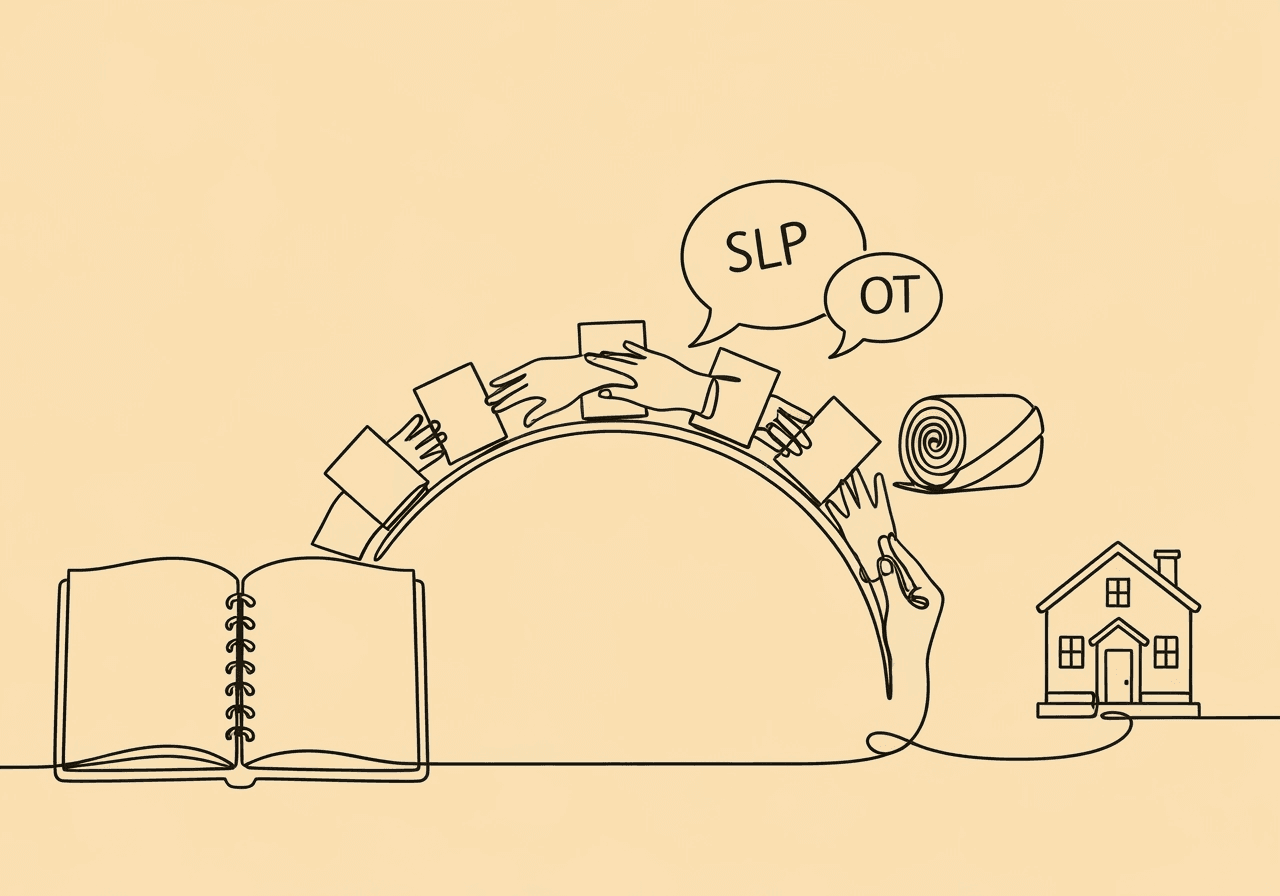
ABA therapy often involves working with multiple providers, such as SLPs and school teams. As a BCBA, strong BCBA interprofessional documentation helps coordinate care smoothly. It protects privacy and follows BACB ethics. This guide offers strategies for noting interactions with SLPs, OTs, and school staff. You'll cut down on silos and improve results.
Key takeaways:
- Align behavior plans with team goals for better client outcomes.
- Log all communications to meet BACB standards.
- Use secure tools to share data while guarding confidentiality.
- Document joint decisions to build team trust.
- Review records regularly to stay compliant.
Interprofessional collaboration (IPC) unites experts from different fields to meet a client's full needs, especially for those with autism spectrum disorder (ASD). For BCBAs, it means blending behavior strategies with SLP, OT, and educator inputs for unified plans. The BACB Ethics Code (2022) highlights this in Standard 1.07. It stresses teamwork to aid client welfare and honor each role's limits.
Clear roles kick off good IPC. BCBAs handle behavior work, but notes must show how it fits with others—like linking to an SLP's communication aims. The Behavior Analyst Certification Board (BACB) (2022) requires BCBAs to record all team talks, shared goals, and intervention reasons. This keeps things honest and skilled. Ethics Code for Behavior Analysts (BACB, 2022).
Time limits and differing views can slow things down. Still, studies show IPC boosts functional skills. The Association for Behavior Analysis International (ABAI) points out that team models cut duplicate services and help skills carry over to new places. Interprofessional Collaborative Practice Between Behavior Analysts and Speech-Language Pathologists (ABAI). BCBAs can log meetings, data shares, and choices in one system. That builds openness.
Try this: Start collaborations with a team agenda on goals. It fits BACB rules and strengthens bonds.
Ensuring Legal Compliance: HIPAA, FERPA, and Data Sharing Practices
Handling privacy laws forms the base of BCBA interprofessional documentation. HIPAA covers protected health information (PHI) for health providers. It demands safe sharing only with okay or for care reasons. FERPA shields school records. It lets shares go to those with a "legitimate educational interest" without upfront consent.
School BCBAs often deal with FERPA for IEP-integrated records. But HIPAA kicks in for Medicaid billing or outside clinician shares. The U.S. Department of Health and Human Services (HHS) notes schools usually skip HIPAA unless they run a health clinic. FERPA and HIPAA Guidance (U.S. Department of Education). For data swaps, get signed releases. They should list what info—like behavior stats—can move and to whom.
Good habits: Pick encrypted tools for notes. Stick to needed details, like goal progress, without extra PHI. The BACB Ethics Code (2022) matches this by requiring secrecy in team work. Breaches might bring fines from HHS or risk certification loss. So, train your team yearly on these. What are the Penalties for HIPAA Violations? 2024 Update (HIPAA Journal).
Here's how it works: At an IEP meeting, note consent by voice or paper. Then share just key behavior baselines for supports. This keeps rules in check and aids team care.
| Aspect | HIPAA | FERPA |
|---|---|---|
| Applies To | Health providers and PHI | Schools and educational records |
| Sharing Rules | Consent or treatment need required | Legitimate educational interest allows without prior consent |
| BCBA Example | Billing Medicaid triggers it | IEP integration uses it primarily |
Documentation Frameworks for Interprofessional Collaboration
Solid setups make BCBA collaboration documentation straightforward and strong. Use set templates for meeting logs. They track date, who joined, topics like goal fits, choices, and next steps. The Interprofessional Education Collaborative (IPEC) shapes this. It covers roles, talks, teams, and morals—all noted to follow inputs.
Core parts cover shared aims, logs, and updates. For instance, show how ABA targets—like cutting elopement—back team plans. Add metrics such as frequency counts. Log emails, calls, or meets with reasons for any skipped ideas, following BACB Standard 2.09. Share progress graphs or overviews via safe sites.
A Journal of Autism and Developmental Disorders piece (2021) says this kind of setup aids group reviews and tweaks. Standards for Interprofessional Collaboration in Autism Services (Springer, 2021). For ABA coordination of care notes, try a team SOAP: Team views go in subjective; data in objective; fit checks in assessment; tasks in plan. It stops repeats and backs smart changes.
Tools like Praxis Notes offer safe templates. Check our BCBA Ethical Documentation Best Practices for more on ethics.
Collaborating with SLPs and OTs: Joint Goal Planning Documentation
Teaming with SLPs and OTs puts BCBA interprofessional documentation on shared goals. It mixes behavior, talk, and sensory aids. Start with joint checks: BCBAs give behavior facts, SLPs add language starts, OTs note sensory sides. Then build SMART goals together. One might be: "Client uses a script phrase (SLP idea) in shifts to drop tantrums 50% (BCBA aim)."
Put it in one plan. Spell out roles—like OT breaks in ABA time. Log bi-weekly meets with who came, what was said, and changes. The American Occupational Therapy Association (AOTA) and ABAI back this to dodge clashes and spread skills. Joint Statement on Interprofessional Collaborative Goals (AOTA).
Scope differences can trip you up. Note kind fixes, per BACB rules. Say an OT offers a tool without proof—log your evidence check and swap pick.
A review on behavior analysts and OTs working together shows integrated goals can lift social skills. A Review of Collaboration between Behavior Analysts and Occupational Therapists (ASAT). For session notes, see our Master CPT 97155 Docs: Template & Tips for BCBAs.
School Consultation: Aligning Documentation with IEPs and 504 Plans
Schools call for exact ABA coordination of care notes to match IEPs (IDEA) and 504 Plans (Section 504). BCBAs note functional behavior assessments (FBAs) from class views. These lead to behavior intervention plans (BIPs) linked to learning aims—like easing outbursts for class access.
Main files:
- FBA reports with baselines, triggers, and guesses, shared safely under FERPA.
- BIP ties to IEPs, such as token systems for task follow-through.
- Logs for visits: Staff training, check-ins on how it's done, and progress facts.
The U.S. Department of Education (2022) wants proof of "free appropriate public education" (FAPE). Supporting Students with Disabilities (ED.gov, 2022). Join IEP meets and note your input, like why ABA matters.
For 504s, stress aids like sensory help. Track with fidelity scores to prove effects. If staff push back, log the training you gave.
Our BCBA Client File Review Checklist helps sort school files. Also, explore School-Based ABA Consultation Guide for more tips.
Billing Practices: Documenting Consultation Time with CPT 97155 and 97156
Right billing links to solid BCBA interprofessional documentation. CPT 97155 handles ABA treatment tweaks by a BCBA. Notes need session time, aims hit, client reactions, and data-based shifts—like plan changes from SLP views.
CPT 97156 covers family training. Log direct caregiver time, including team work like IEP ready-up, length, and results. The American Medical Association (AMA) requires need proof with before/after data. Behavioral Health Coding Guide (AMA, 2024).
Back your time: Tie consults to client gains, skip fuzzy notes. Fix common slips like missing who-attended lists—stamp all. The ABA Coding Coalition says billing 97153 (tech time) alongside is okay if separate. Supplemental Guidance Resource (ABA Coding Coalition).
See our BCBA Protocol Modification Documentation: CPT 97155 Guide for easy templates. For billing extras, check CPT 97156 Family Training Notes.
Preparing for Audits: Checklist for IPC Records
Being audit-ready protects your work as checks grow. Keep digital files in one spot, following BACB and HIPAA. Hold intake forms, okay forms, plans, notes, and team logs for seven years at least.
Checklist basics:
- Full check: Dates, signs, real data.
- Rule fit: Privacy okay, BACB ethics hold.
- Bill review: CPT reasons, no extra charges.
- Team audit: Goal shares, talk paths.
- Quarterly self-checks: Aim for 80%+ pass, as in BHCOE standards.
The BACB Handbook (2024) pushes ahead-of-time notes to skip penalties. BCBA Handbook (BACB, 2024). Train on watch-outs like mismatched data. Common Questions and Answers About BHCOE Accreditation.
After audits, fix gaps with plans for steady quality.
Frequently Asked Questions
What are the key ethical considerations for BCBAs when collaborating with other healthcare professionals?
BCBAs put client good first, keep secrets, and honor role limits per the BACB Ethics Code (2022). Log all team steps to back choices and match evidence. Ethics Code (BACB, 2022). It builds faith and skips breaks.
How can BCBAs effectively document their interprofessional collaboration efforts?
- Set up logs for meets, goals, and data swaps with reasons and tasks.
- Pick one safe HIPAA site for easy reach.
- Note roles and changes to track fits.
A PMC review (2021) stresses this for smooth care. Standards for IPC (Springer, 2021).
What are the main barriers to interprofessional collaboration in ABA therapy?
Time and money logjams lead, along with view clashes and biases. A Kean University study (2023) flags preconceived biases and philosophical differences as big hurdles. Beat them with straight talk and steady meets. Charting a Path to Collaboration: Experiences of Occupational Therapists and Applied Behavior Analysts (Kean University).
How do HIPAA and FERPA differ in BCBA school documentation?
HIPAA guards health info for billing or outside shares. FERPA handles school records for learning aims. Get releases for mixes, per HHS (2023) advice. Schools lean FERPA unless billing pulls in HIPAA.
What strategies improve collaboration between BCBAs, SLPs, and OTs?
Joint checks and shared SMART goals in one plan lift results. AOTA (2023) suggests bi-weekly talks to blend sensory and behavior aids well. Joint Statement on Interprofessional Collaborative Goals (AOTA).
How often should BCBAs conduct internal audits for interprofessional records?
Do them quarterly to match BACB and payer rules. Check full notes and fits. ABA guides note this cuts risks and aids top care.
Mastering BCBA interprofessional documentation turns hurdles into chances for full, client-focused ABA. Stick to BACB ethics, use HIPAA/FERPA-safe setups, and detail work with SLPs, OTs, and schools. You'll gain legal cover, smoother billing, and stronger results—supported by BACB (2022) sources.
Next: Check one file with the list, add a team template for meets, and tweak CPT notes for accuracy. These steps toughen your work, letting IPC flow easy. For BCBA tools, try Praxis Notes.
Popular in Compliance & HIPAA
- 1
RBT Renewal Competency Documentation Guide for BCBAs
5,3846 min read - 2
RBT 2026 Documentation Changes: What BCBAs Need to Know
4,8435 min read - 3
BCBA Procedural Fidelity Checklist: Essential H-6 Guide
4,4076 min read - 4
Florida Medicaid ABA 2025: SMMC Compliance Guide
3,7945 min read - 5
ABA Documentation Checklist: RBT Compliance Guide 2025
3,6959 min read
Popular in Compliance & HIPAA
- 1
RBT Renewal Competency Documentation Guide for BCBAs
5,3846 min read - 2
RBT 2026 Documentation Changes: What BCBAs Need to Know
4,8435 min read - 3
BCBA Procedural Fidelity Checklist: Essential H-6 Guide
4,4076 min read - 4
Florida Medicaid ABA 2025: SMMC Compliance Guide
3,7945 min read - 5
ABA Documentation Checklist: RBT Compliance Guide 2025
3,6959 min read
Related Resources
Explore more helpful content on similar topics

BCBA Ethics 3.0: Essential Documentation Checklist
Navigate BCBA ethics 3.0 documentation requirements effortlessly with our essential checklist. Learn key practices for service agreements, informed consent, and confidentiality to ensure BACB compliance and streamline your ethical record keeping.
ABA Documentation Compliance Audit: BCBA Checklist
Master ABA documentation compliance audits with this essential BCBA checklist. Learn to verify session notes, data integrity, HIPAA protocols, and clinic record retention for seamless compliance and risk reduction.

7-Step Guide to BCBA Interdisciplinary Documentation
Master BCBA interdisciplinary documentation with this 7-step guide. Ensure HIPAA-compliant ABA data sharing with schools, OT, SLP—plus checklists and ethical tips for optimal ROI.