Master CPT 97157 Documentation & Billing for BCBAs
Discover CPT 97157 documentation essentials: Billing guidelines, group treatment rules, ethical tips, pitfalls, and checklist for compliant BCBAs notes.

By Praxis Notes Team Editorial team
Published 5 min read
On this page
Tackling CPT 97157 Documentation Challenges
Documenting CPT 97157 can be a headache for busy BCBAs. These group adaptive behavior treatment sessions help multiple families at once. Yet, accurate records are key to avoid billing denials and stay ethical. The ABA Coding Coalition guidelines explain that CPT code 97157 covers multiple-family group adaptive behavior treatment guidance by a qualified professional like a BCBA. It’s done without the patient, in 15-minute units (ABA Coding Coalition guidelines).
This guide covers core requirements, note essentials, ethics, pitfalls, code comparisons, and a checklist. You’ll get practical tips based on payer rules and standards. These steps highlight medical necessity and compliance to boost caregiver results. Have you audited your last session notes yet?
What Is CPT 97157 for Multiple-Family Groups?
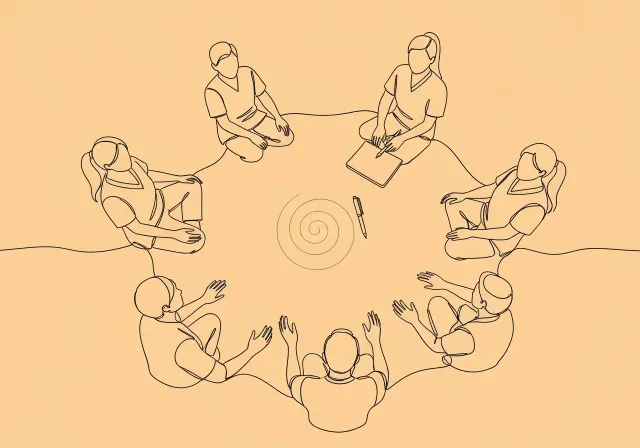
CPT 97157 means multiple-family group adaptive behavior treatment guidance. It’s provided in person to caregivers, with kids not there. A physician or qualified healthcare professional like a BCBA leads it. Sessions involve up to eight families learning behavior techniques and daily integration.
The American Medical Association’s behavioral health coding guide notes billing in 15-minute units. One unit is 8-22 minutes of active service (AMA behavioral health coding). These sessions encourage group knowledge sharing among families. This aids skill generalization at home, as supported by research on multiple-family groups for children (NIH multiple family group benefits).
For BCBAs, include interactive parts like role-play on behavior triggers. Notes must connect guidance to the patient’s plan. This shows how it targets goals, such as cutting elopement or building communication.
Payer rules from Humana Military say the first 97157 session needs to happen within 30 days of approval (Humana Military CPT codes). Telehealth works for 97157 in 2024 if supervision fits and the platform meets HIPAA standards (Provider Express telehealth guide).
Key Documentation Needs for CPT 97157
Strong CPT 97157 documentation proves medical need and follows code rules. Sessions focus on face-to-face caregiver guidance, no client involved. The ABA Coding Coalition requires time logs with start and end times. This backs the billed units, often up to six per day (ABA Coding Coalition FAQs).
List the provider’s qualifications, like BCBA status. Note the location, in-person or virtual. Summarize the session, linking to the patient’s diagnosis—usually autism from DSM-5. Anthem payers want proof that group size up to eight fits therapy goals (Anthem ABA provider guide).
If assistants help, document BCBA oversight. Don’t forget supervision notes for indirect roles.
What Goes in a Solid 97157 Note?
A good 97157 note lists attendees, time, content, progress, and homework. Begin with names, patient ties, and group consent. Avoid sharing patient IDs without okay.
Log time clearly: “From 10:00 AM to 11:30 AM, 90 minutes or six units.” Describe topics like ABC analysis or reinforcements. Example: “Modeled de-escalation for tantrums using verbal cues.”
Note progress: “Family A saw 20% fewer home issues; better at spotting cues.” Give homework: “Use token systems; track with sheets.”
This meets 97157 billing guidelines by showing skill transfer. Here’s a note outline:
- Attendees and Consent: Names, roles, signed forms.
- Time and Units: Start/end, unit math.
- Content: Techniques linked to goals.
- Progress: Changes noted, issues fixed.
- Homework: Tasks with tracking.
Handling Ethics and Privacy in Group 97157 Sessions
Group settings demand strong confidentiality from BCBAs. Follow the BACB Ethics Code, sections 2.04 on privacy and 2.05 on records (BACB Ethics Code). Share info only with consent, to avoid harm, or if required by law.
For 97157, get consents at start. Outline general topics; ban patient details. Set rules: “Share strategies, not family specifics.” If someone slips, note fixes like reminders.
Protect all records securely, especially online. The 2022 code covers these in core sections—no big 2024 shifts.
Pitfalls to Dodge in 97157 Billing and Documentation
Billing slips often hit from weak medical need proof. Skip diagnosis links or progress data, and denials follow. Ensora Health says missing signatures or times cause 30% of group code rejects (Ensora Health billing practices).
Don’t mix 97157 with patient codes or skip BCBA oversight. Audits check group size; over eight families kills claims, per coding rules (ABA Coding Coalition FAQs). Round units wrong—like full for under eight minutes—and break AMA standards.
Get group auth first. Vague notes trigger more requests. Why not review your billing log quarterly?
How Do CPT 97156, 97157, and 97158 Compare?
These codes differ to avoid errors. CPT 97156 is one-family guidance, patient maybe there, 15-minute units for personal tips (Operant Billing code guide).
97157 is multi-family, no patient, for caregiver sharing. 97158 is up to eight patients there, modifying protocols for skills like social practice.
Differences: Who joins (caregivers vs. patients), presence (no vs. yes), goal (guidance vs. treatment). All bill 15 minutes, but notes vary—97157 on group flow, 97158 on patient work. No same-day mix without reason, says the Coalition (ABA Coding Coalition guidelines).
| Code | Focus | Participants | Patient Present? | Billing Units |
|---|---|---|---|---|
| 97156 | One-family guidance | One family | Yes/No | 15 minutes |
| 97157 | Multi-family guidance | Up to 8 families | No | 15 minutes |
| 97158 | Group patient treatment | Up to 8 patients | Yes | 15 minutes |
Checklist for Your 97157 Notes
Follow this payer-based list to cut errors:
- Check Attendance: List all, ties, consents.
- Track Time: Start/stop; units (8-22 min =1).
- Cover Content: Topics like “Differential reinforcement for compliance.”
- Gauge Progress: Insights, goal links.
- Set Homework: Tasks, tools like logs.
- Link Necessity: Diagnosis, plan; sign off.
- Ethics Check: No breaches; note fixes.
- Full Review: Clear, aligned, no extras.
- Secure Storage: HIPAA system, quick upload.
- Audit Ready: Necessity flagged in reports.
FAQ: CPT 97157 Documentation Basics
What Documentation Is Needed for CPT 97157?
Records cover group guidance sans patient. Include 15-minute time units, attendees, summaries, and medical need like DSM-5 autism. The Coalition stresses active treatment and skill notes (ABA Coding Coalition FAQs). Signatures and progress ties stop denials.
How Is CPT 97157 Different from 97158?
97157 trains multiple caregivers, no patients, on strategies. 97158 treats up to eight patients directly for skills like socializing (Operant Billing code guide). 97157 notes skip patient info, focus on dynamics.
What Billing Mistakes Hit CPT 97157?
Common ones: Weak necessity proof, bad timing, groups over eight—denials result. Ensora notes sloppy docs cause 30% problems; add consents and plan links (Ensora Health billing practices). Get auth upfront.
Can You Bill CPT 97157 via Telehealth?
Yes, in 2024 for qualified BCBAs with supervision and secure tech. Humana says first session within 30 days of okay; note virtual consent (Humana Military CPT codes).
How to Keep Confidentiality in 97157 Groups?
Get consents for general shares under BACB 2.04. Set rules, document slips. Protect records per 2.05 (BACB Ethics Code). Reminders help in family groups.
Thorough CPT 97157 documentation lets BCBAs run strong group adaptive behavior treatment. It follows 97157 billing guidelines and ethics. Sources show good notes secure pay and build caregiver trust. This leads to outcomes like better home generalization (NIH ABA outcomes).
Next: Audit five recent sessions with the checklist. Add BACB consents to forms. Check payers often for changes, like telehealth. Solid docs free you for better guidance—our goal at Praxis Notes.