
ABA Latency Documentation for RBTs: Step-by-Step Guide
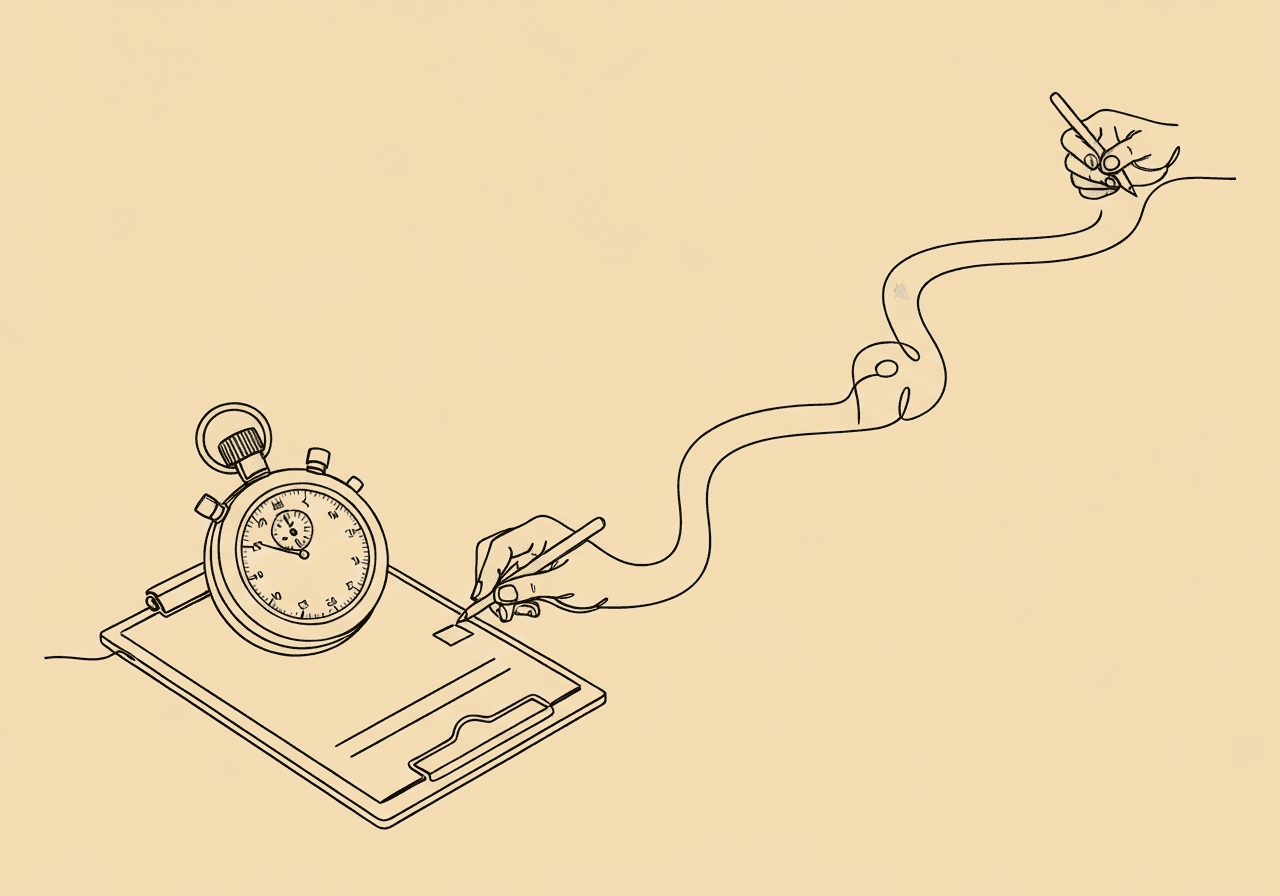
Master ABA Latency Documentation as an RBT
Imagine delivering precise ABA latency documentation that uncovers hidden delays in your client's responses. This leads to faster skill mastery and better session outcomes. Many behavior analysts doubt the accuracy of reported data. They often note incomplete collection by data takers. As an RBT, mastering RBT latency data collection ensures compliance. It also drives real progress.
This guide equips you with evidence-based steps for document latency ABA sessions. You'll learn latency basics, tools, collection processes, recording techniques, error avoidance, and BCBA reporting integration.
- Core definition and applications
- Setup essentials
- Step-by-step collection
- Data sheets and graphing
- Common pitfalls
- Report integration
Key Takeaways for RBTs
- Grasp latency basics to track response speed and fluency effectively.
- Choose reliable tools like timers and apps for precise ABA latency documentation.
- Follow a clear step-by-step process with IOA checks for consistent data.
- Record and graph latencies to spot trends and progress quickly.
- Dodge common errors by using real-time logging and team training.
What Is Latency Measurement in ABA Contexts?
Latency measures the time between a stimulus—like an instruction or prompt—and the start of the target behavior. It captures the delay from cue delivery to response initiation. This often happens in seconds. According to Actify ABA, this temporal dimension reveals fluency beyond mere accuracy Actify ABA (2024).
RBTs use latency to assess attention, motivation, and comprehension. Think of a child taking 15 seconds to begin "sit down" after the prompt. That signals potential issues. Baseline latency data guides interventions. It helps track reductions over time.
You'll see latency in common scenarios. These include skill acquisition trials or safety responses. Learning Behavior Analysis notes everyday examples. Like time from a phone beep to checking it. Adapt that for therapy sessions Learning Behavior Analysis (2024).
Industry practices emphasize clear operational definitions for stimuli and responses. Check our ABA operational definition beginners guide for details. It helps pinpoint behaviors precisely.
Unlike frequency counts, latency focuses on response speed. While frequency counts track occurrences, latency zeroes in on how quickly responses happen. It pairs well with duration for full temporal analysis. Got the difference? It's key for thorough ABA latency documentation.
Why does this matter for you as an RBT? Precise latency tracking shows if a client hesitates due to confusion or low motivation. In my experience, spotting these delays early lets you tweak prompts. That boosts session success right away.
Essential Tools and Setup for ABA Latency Documentation
Reliable tools boost data integrity. Industry benchmarks target 80% or higher accuracy via inter-observer agreement (IOA) checks Links ABA (2024).
Start simple with a stopwatch or phone timer for manual timing. Position it where you can see and start it easily. Digital options excel too. CentralReach and Theralytics support real-time latency capture. They reduce errors over paper methods.
Setup steps make all the difference:
- Calibrate devices before sessions. Test them to ensure accuracy.
- Position for clear stimulus delivery and behavior observation. Avoid blind spots.
- Test prompts for consistency. Use exact phrasing every time.
Apps like Behavior Tracker Pro offer precision timing and auto-graphing. For Praxis Notes users, integrate with HIPAA-compliant platforms. This streamlines RBT latency data collection.
Prepare your environment carefully. Minimize distractions. Ensure the client faces you. Log session variables like fatigue. Pair tools with standardized protocols from your BCBA.
Digital shifts yield 35% faster behavioral progress through consistent collection Links ABA (2024). Train weekly on tool use. That builds reliability. Have you tried switching from paper to an app? It often feels like a game-changer for busy RBTs.
Consider a quick practice run. Time a mock stimulus yourself. Note how device choice affects ease. Reliable setup prevents frustration mid-session.
Step-by-Step Process for ABA Latency Documentation in Sessions
Follow this verified process from ABA guidelines to document latency ABA sessions accurately. It's straightforward once you break it down.
-
Define target: Identify the stimulus (e.g., "Put on shoes") and response start (e.g., touching shoes). Use precise operational definitions. This step avoids ambiguity.
-
Deliver stimulus: Give the clear instruction. Then immediately start the timer. Note: Time from instruction end, per Actify ABA guidelines Actify ABA (2024). Say it once, crisply.
-
Observe and stop: Watch closely. Halt the timer at behavior initiation. Record exact seconds right away. Double-check your eyes didn't trick you.
-
Repeat trials: Collect multiple trials per session. Note context like prompts used. Vary only as planned.
-
Real-time entry: Log immediately to avoid recall bias. Apps automate this perfectly.
Here's an example in action. Prompt "Line up." Timer starts. Child steps forward at 8 seconds. Record "8s." Simple, right?
For high-motion sessions, use hands-free apps. They let you focus on the client. Align with RBT Task List A-01: Prepare for data collection. That keeps you BACB compliant.
Consistency across RBTs requires IOA checks. Two observers time independently. Compare for 80% or higher agreement BCBA Exam Study Topics. Practice this with a colleague. It sharpens your skills fast.
What if a trial goes wrong? Reset calmly. Note the disruption. Keep going. This process builds trust in your data.
Recording Data on Sheets and Initial Graphing
Effective sheets capture essentials: date, time, stimulus, response, latency value. They make analysis easy later.
Standard components from Amaze ABA include:
- Session ID and client initials.
- Trial number.
- Latency in seconds (e.g., 12s).
- Notes on antecedents/consequences Amaze ABA (2024).
Here's a sample latency data sheet:
| Date | Session ID | Trial # | Stimulus | Latency (s) | Notes |
|---|---|---|---|---|---|
| 2024-10-01 | S001 | 1 | Sit down | 15 | No prompt, distracted |
| 2024-10-01 | S001 | 2 | Line up | 8 | Clear instruction |
| 2024-10-01 | S001 | 3 | Put on shoes | 12 | Partial prompt used |
Use Google Sheets or editable PDFs for averages. Sum latencies. Divide by trials (e.g., total 60s / 5 = 12s mean). It's quick math.
Graphing basics help spot patterns:
- X-axis: Sessions or trials.
- Y-axis: Latency (seconds).
- Line or bar for trends. Overlay baseline vs. intervention.
Tools like Excel or Motivity auto-plot. Aim for decreasing trends. They signal progress.
Differentiate skill vs. behavior data. See our documenting skill vs. behavior data guide.
Daily, calculate mean or median. Weekly, review for outliers. This routine keeps your ABA latency documentation sharp. Ever graphed a full week? The visual drop motivates everyone.
Expand notes if needed. Jot environmental factors. They explain spikes.
Identifying and Avoiding Common Documentation Errors
Errors undermine trust. Analysts often question data reliability.
Top pitfalls hit RBTs hard:
- Inaccurate timing: Practice with mock trials. Use apps over watches.
- Delayed entry: Record live. Memory fades post-session.
- Inconsistency: Stick to one method. Train your team.
- Vague notes: Always quantify (e.g., "5s" not "slow").
- Skipping data: Collect during disruptions. Use backup observers.
Audit sheets weekly. Solutions work:
- Conduct IOA in at least 20% of sessions Master IOA Formulas.
- Digital prompts enforce fields.
- BCBA reviews catch gaps.
Proactive habits build precision. Start small. Time a few mock sessions daily. Notice improvements? That's the goal.
Common fix: Pair with a buddy for spot checks. It turns errors into learning moments. Over time, your data shines.
Integrating Latency Data into BCBA Reports for Compliance
Share raw data, graphs, and insights. Define latency clearly: "Time from SD to response onset."
Structure your report like this:
- Summary: Mean latency drop (e.g., 20s to 5s from baseline to intervention).
- Graphs: Visual trends tell the story.
- Analysis: Link to goals. Recommend adjustments.
- Compliance: Align with BACB ethics via verifiable data.
Per Artemis ABA, highlight intervention effects Artemis ABA (2024). Include IOA results.
Upload to Praxis Notes for auto-reports. Discuss in supervision: "Latency reduced 75%, indicating fluency."
Ethical note: Transparent gaps maintain integrity. Always flag issues upfront.
This integration closes the loop. Your RBT latency data collection supports bigger decisions.
Frequently Asked Questions
What is latency in ABA?
Latency measures time from a stimulus, like an instruction, to behavior start. Actify ABA defines it as elapsed seconds between cue and response initiation. It's key for fluency Actify ABA (2024).
How do you measure latency during ABA sessions?
Start timer post-stimulus. Stop at response onset. Record in seconds. Repeat for averages. Use stopwatches or apps for precision Learning Behavior Analysis (2024).
What tools are best for RBT latency data collection?
Stopwatches, Theralytics, CentralReach, or Behavior Tracker Pro. Digital tools reduce errors compared to paper Links ABA (2024).
What are common errors in ABA latency documentation?
Inaccurate timing, delayed logging, inconsistency. Avoid with real-time apps and IOA checks targeting 80% or higher agreement Artemis ABA (2024).
How does latency differ from duration in ABA?
Latency is stimulus-to-start time. Duration is total behavior length. Both are temporal. Latency targets initiation speed.
How can latency data inform BCBA reports?
Plot trends showing reductions. Tie to interventions. It ensures data-driven, compliant updates Amaze ABA (2024).
Mastering ABA latency documentation transforms your sessions. Hit 80% or higher IOA benchmarks. Use digital aids to cut errors. Your data fuels real progress. Clients gain fluency. BCBAs trust your insights.
Next steps:
- Download a latency sheet. Practice 10 mock trials today.
- Implement IOA with a colleague this week.
- Review trends in supervision. Adjust prompts as needed.
Elevate your RBT latency data collection. Precise data drives change.
Popular in ABA Session Notes & Tools
- 1
RBT Supervision Documentation: 2025 BACB Guide & Templates
6,5739 min read - 2
Master ABA Medical Necessity Documentation: Avoid Denials
4,1879 min read - 3
Master ABA SOAP Notes: Guide for RBTs & BCBAs
3,9949 min read - 4
ABA Documentation Best Practices for RBTs: Essential Tips
3,2975 min read - 5
Direct vs. Indirect RBT Supervision Documentation Guide
3,0357 min read
Popular in ABA Session Notes & Tools
- 1
RBT Supervision Documentation: 2025 BACB Guide & Templates
6,5739 min read - 2
Master ABA Medical Necessity Documentation: Avoid Denials
4,1879 min read - 3
Master ABA SOAP Notes: Guide for RBTs & BCBAs
3,9949 min read - 4
ABA Documentation Best Practices for RBTs: Essential Tips
3,2975 min read - 5
Direct vs. Indirect RBT Supervision Documentation Guide
3,0357 min read
Related Resources
Explore more helpful content on similar topics
Documenting Skill Generalization in ABA: RBT Guide
Learn how to document skill generalization in ABA effectively as an RBT. This guide details key components, step-by-step session notes, and compliance tips to ensure funding success and avoid common pitfalls.

Motivating Operations Documentation ABA: How-To
Master Motivating Operations Documentation ABA with expert how-to tips. Learn to record EOs, AOs, UMOs, and CMOs in session notes to enhance client motivation and treatment efficacy. Start today!
RBT Baseline Data Documentation Guide for Beginners
New to RBT baseline data documentation? This beginner's guide reveals step-by-step strategies for collecting initial ABA data, ensuring baseline data stability, and upholding ethical standards in behavior analysis sessions.