Mand Training for Parents: ABA Home Guide
Learn mand training for parents with ABA to teach requests at home. Master 4 steps: motivation, prompting, reinforcing, fading. Reduce behaviors, build phrases. Start today!

By Praxis Notes Team Editorial team
Published 7 min read
On this page
Imagine the frustration your child might feel when they can’t express a simple want, like asking for a snack or a toy. This often leads to tantrums or withdrawal. For families of autistic children receiving ABA therapy, mand training for parents offers a powerful way to bridge that gap. It turns everyday moments into opportunities for functional communication.
With autism affecting about 1 in 31 U.S. children, according to the Centers for Disease Control and Prevention (CDC), many face communication challenges that mand training directly addresses. This evidence-based approach, rooted in Applied Behavior Analysis (ABA), teaches children to request what they need. It reduces problem behaviors and builds independence.
Here are key takeaways from this guide:
- Mand training teaches requesting skills to meet immediate needs, starting with motivation and prompts.
- It cuts challenging behaviors by offering a positive alternative to frustration.
- Parents can use low-prep home strategies during routines like meals or play.
- Progress from single words to phrases with consistent reinforcement.
- Troubleshoot hurdles like extinction bursts through teamwork with your ABA therapist.
In this guide, you’ll discover what manding is and its benefits, including how it curbs challenging behaviors. We’ll break down the four essential steps tailored for home use. You’ll get low-prep strategies to seize daily opportunities, plus tips for progressing to phrases. Finally, explore troubleshooting for common hurdles like consistency. By the end, you’ll have actionable tools to support your child’s growth.
What Is Mand Training and Why It Matters for Your Child
Manding, often called requesting in ABA, is the most functional form of communication. It focuses on what your child wants or needs right now. In autism, where communication deficits affect about 25-30% of children non-verbally according to the National Institute of Mental Health (NIMH), mand training empowers them to ask for items, actions, or help. They can use words, signs, pictures, or devices.
This skill forms the foundation for more complex language and social interactions. It makes manding a priority in ABA programs. For parents, learning mand training means extending therapy into daily life. Research shows this boosts skill generalization.
A study published in the Journal of Autism and Developmental Disorders found that parent-implemented mand interventions led to significant gains in children’s communication skills (Verbal Mand Interventions for Young Children with Autism: a Review of the Literature). This approach not only helps your child express needs. It also strengthens family bonds through shared successes.
Beyond basics, manding aligns with B.F. Skinner’s verbal behavior framework. It emphasizes motivation as the driver. Parents often start with high-value items like favorite toys to spark interest. This ensures the process feels natural rather than forced.
How Mand Training Reduces Problem Behaviors
Problem behaviors like screaming or hitting often stem from unmet needs. Children can’t communicate them effectively. Mand training interrupts this cycle. It gives your child a clear, reinforced way to request.
According to the National Institutes of Health (NIH), this reduces maladaptive behaviors in children with ASD. It provides an alternative to frustration-based actions (POWER: A Caregiver Implemented Mand Training Intervention). Evidence from peer-reviewed studies highlights this impact.
For instance, research in the Journal of Applied Behavior Analysis showed that mand training decreased challenging behaviors by up to 70% in participants. Children learned to ask instead of act out (Increasing the Mand Repertoire of Children With Autism Through the Use of an Interrupted Chain Procedure). Parents report fewer meltdowns once mands become habitual. This creates calmer home environments.
Importantly, this reduction isn’t immediate. It builds through consistency. By reinforcing requests, you teach that communication works better than aggression. This aligns with ABA principles of positive behavior support.
The 4 Steps of Mand Training: A Parent’s Guide
Mand training follows a structured yet flexible four-step process: creating motivation, prompting, reinforcing, and fading. This sequence, drawn from ABA best practices, allows parents to teach requesting without overwhelming sessions. Start small to build confidence for both you and your child.
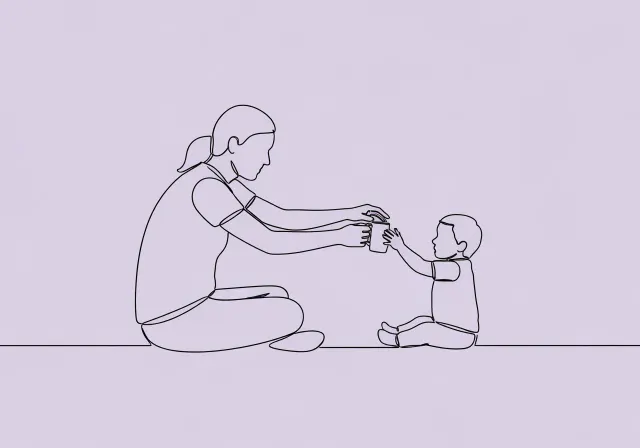
To begin, create motivation by identifying what your child wants—perhaps a drink or playtime. Withhold it briefly to build desire. According to the Behavior Analyst Certification Board (BACB), motivating operations like hunger or boredom make requests more likely (BCBA Task List (5th ed.)). Hold a toy just out of reach and wait for any attempt to communicate.
Follow up with prompting the request through modeling: say “juice” while pointing, or use a picture if verbal isn’t ready. Keep prompts minimal to encourage independence. Fade them over time as outlined in the next step.
Next up, reinforce immediately by providing the item and praising enthusiastically. This strengthens the behavior. Wrap up by fading prompts gradually, starting with full assistance and reducing to subtle cues. This ensures your child mands independently across settings.
For deeper insights on reinforcement types, check our guide on ABA reinforcement and punishment definitions.
Low-Prep Strategies for Manding at Home
You don’t need fancy tools for effective manding strategies at home. Everyday routines offer perfect teachable moments. Teaching requests ABA principles at home means seizing opportunities like mealtime or play. Delay access to preferred items, such as holding a snack out of reach until your child requests it.
This in-the-moment approach, supported by parent training research from Regis College, promotes natural learning without structured sessions (Parent Training in Applied Behavior Analysis Treatment). Incorporate visuals like simple picture cards for non-verbal children. Place them near high-motivation areas like the fridge.
During bath time, prompt “water” before turning on the faucet. Reinforce with immediate access. These low-prep tactics align with ABA’s focus on generalization. They help skills transfer from therapy to home.
Track progress informally with a notebook. Note successful mands to stay motivated. Involve siblings or partners to vary voices and settings. This broadens your child’s comfort zone.
For session prep tips that complement home practice, see our resource on RBT Task List C-2: Session Preparation Guide.
Building from Single Words to Short Phrases
Once single-word mands like “ball” are reliable, graduate to phrases by expanding on successes. Start with carriers like “I want” or action words such as “open” before giving the item. Model “want ball” and reinforce approximations.
This progression, as detailed in verbal behavior training protocols, builds sentence structure naturally (Teaching a Child With Autism to Mand for Information Using “How”). Use errorless teaching: Provide the full phrase as a prompt initially. Then fade to partial cues.
During snack time, hold crackers and say “want crackers?” to encourage “want crackers.” Research from Walden University shows parent-led expansions like this improve expressive language in ASD children (Effectiveness of Parent-Led Applied Behavior Analysis at Improving Social Communication).
Practice across contexts, like “help push” for toys, to ensure versatility. Celebrate small wins with high-value reinforcers. Keep sessions fun and pressure-free.
Troubleshooting Common Challenges in Mand Training
Consistency is key in mand training. Yet lapses can stall progress. Commit to reinforcing requests every time, even on busy days. If your child reverts to old behaviors, remember it’s often an adjustment phase.
Collaborate with your ABA therapist for aligned strategies. Parent-therapist teamwork enhances outcomes per NIH guidelines (Parent Training and Therapy in Children with Autism). An extinction burst, a temporary spike in problem behaviors when old habits lose payoff, is common during shifts.
For example, if screaming previously got a toy, it may intensify briefly after ignoring it. Stay calm, withhold reinforcement for the burst, and prompt the mand instead. Bursts typically fade within days with consistency (Basic and applied research on extinction bursts).
If motivation wanes, rotate reinforcers to maintain interest. Seek support if bursts persist beyond a week. Adjust plans collaboratively.
Frequently Asked Questions
What is mand training in ABA for families?
Mand training teaches children with autism to request needs or wants using words, signs, or pictures. Parents create opportunities and reinforce attempts. Families practice daily, like prompting “more” during meals. This leads to reduced frustration.
Why is mand training important for children with autism?
It builds functional communication, reducing challenging behaviors from unexpressed needs. NIH research shows manding increases social initiations and cuts maladaptive actions (POWER: A Caregiver Implemented Mand Training Intervention). For parents, it empowers daily interactions. This improves family dynamics.
How can parents practice mand training at home?
Withhold preferred items briefly, prompt requests, and reinforce immediately. Use routines like playtime for low-prep practice. PaTTAN recommends visual supports for non-verbal kids (Teaching your Child to Ask for What They Want). Consistency across family members ensures generalization.
What are examples of mands in daily life?
Common mands include “juice” for drinks, “open” for doors, or “help” for assistance. These evolve from single words to phrases like “want play.” Tailor to your child’s interests for motivation.
How long does an extinction burst last in mand training?
Extinction bursts, where behaviors intensify temporarily, usually last a few days to a week with consistent non-reinforcement (Basic and applied research on extinction bursts). Track progress and consult your therapist if needed.
Can non-verbal children benefit from mand training?
Yes, using pictures, signs, or devices. PECS systems are effective starters. Research shows gains in communication for non-verbal kids (Teaching mands for actions to children with autism spectrum). Parents model gestures, reinforcing any approximation.
Mand training for parents transforms frustration into connection. It equips your child with lifelong communication tools while easing daily challenges. Backed by ABA research, this approach not only curbs problem behaviors but fosters independence.
Remember, progress varies. But consistent home practice amplifies therapy results. Start by identifying one high-motivation routine today, like snack time. Apply the four steps. Track a week’s worth of mands to celebrate wins, and discuss with your ABA team for tweaks.