ABA Self-Management for Parents: Build Home Independence
Empower your autistic child with ABA self-management for parents. Learn self-monitoring, goal setting, and home strategies to promote independence. Get started!

By Praxis Notes Team Editorial team
Published 5 min read

On this page
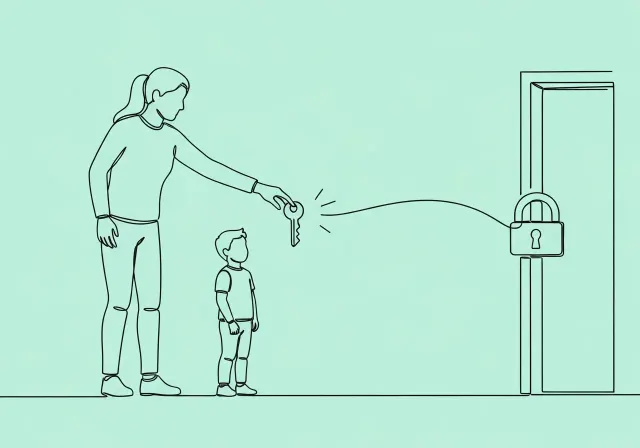
Imagine empowering your child with autism to handle daily tasks independently. This reduces prompts and builds their confidence. The Centers for Disease Control and Prevention (CDC) reports that about 1 in 31 U.S. children has autism spectrum disorder, as per recent data CDC autism data. As a parent, your key role involves ABA self-management for parents, using evidence-based methods to foster independence at home.
This guide covers self-management in ABA, a reliable way to help children with autism monitor their behaviors. You’ll learn the five core components, how to make self-monitoring charts, tips for goal-setting with your child, simple self-instruction phrases, and professional documentation. These steps align with your ABA therapy to promote lasting skills.
Here are five key takeaways to get started:
- Self-management builds child autonomy through structured tools like charts and rewards.
- Parents play a central role by modeling and fading support during routines.
- Involve your child in goals to boost motivation and reduce challenges.
- Use visuals and simple phrases to support daily transitions.
- Collaborate with your ABA team for personalized, trackable plans.
What Is Self-Management in ABA?
Self-management in ABA teaches children with autism to oversee their behaviors and choices without constant adult help. It relies on Applied Behavior Analysis principles, like positive reinforcement, to develop enduring skills. Research from the Association for Science in Autism Treatment (ASAT) shows these interventions improve social skills and routines ASAT self-management.
You can model these skills in daily activities, then step back as your child leads. For example, they might track homework completion for screen time rewards, cutting down on reminders. As noted in a Journal of Special Education and Behavioral Health Sciences study, parent-led ABA self-management for parents raises your confidence more than professional-only approaches Walden University study, 2023. This eases family stress while advancing your child’s growth.
It fits ABA goals like better communication and daily living. Home practice leads to clear progress in independence.
Implementing ABA Self-Management for Parents: The Five Core Components
ABA self-management for parents often uses five linked elements to encourage lasting independence. As detailed by behavior analysis experts, these help children with autism gain awareness and control ASAT self-management.
- Goal Setting: Pick clear targets, like brushing teeth twice daily. It gives focus and makes wins reachable.
- Self-Monitoring: Let your child log behaviors with checklists. They might check off a task to see their patterns clearly.
- Self-Evaluation: Check goals often, with questions like “Did I hit my mark?” This builds reflection and tweaks.
- Self-Instruction: Guide with short verbal cues, such as “Clean up first, then relax.” It acts as a built-in reminder.
- Self-Reinforcement: Let them pick rewards, like a sticker for a good day. This keeps drive going internally.
These pieces form a strong framework. A meta-analysis indicates high success rates in autism skill-building when ABA includes them NIH meta-analysis, 2021. Adapt to home by starting small, based on your child’s level.
Creating Self-Monitoring Charts at Home: A Step-by-Step Guide
Self-monitoring charts help children with autism track behaviors on their own, fitting self-monitoring for autism guidelines. They offer structure to lower anxiety and give quick feedback. Autism Parenting Magazine points out that visuals like these aid understanding and routine following Autism Parenting Magazine, 2023.
Here’s how to create one:
- Choose 2-3 behaviors, like handwashing or sitting for meals, tied to your child’s needs.
- Make a basic design with images or icons—use free online templates.
- Plan check-ins, such as at bedtime, and have your child add stickers for wins.
- Link to rewards, like playtime after several checks, to build habits.
- Review together weekly, tweaking for better fit.
Start with short sessions, like twice a week. The Autism Helper provides home-friendly samples The Autism Helper, 2024. This tool supports promoting independence at home and shares data with your ABA provider.
Involving Your Child in Goal Selection and Reinforcement
Letting your child pick goals makes self-management feel personal and boosts engagement. Ask about their interests, like “Which task do you want to try?” This ABA-based teamwork increases buy-in. A study highlights how child-led goal-setting improves adherence and cuts challenging behaviors NIH study on goal-setting, 2024.
For rewards, offer a list of options, such as a snack or game, linked to steps. Say, “You picked this, and now it’s yours!” to highlight their effort. Skip extra praise; emphasize their success.
Try it in calm moments, then expand to routines. This empowers promoting independence at home. Talk to your BCBA if needed.
Developing Self-Instruction Phrases for Common Routines
Self-instruction phrases serve as inner guides for children with autism during tasks. Short cues like “First/Then” statements outline steps and ease stress. Use simple language, repeated often, for routines such as bedtime, as suggested by autism experts Autism Speaks on communication, ongoing.
Try these:
- Bedtime: “Pajamas first, then read a book.”
- Mealtime: “Sit first, eat one bite.”
- Transitions: “Toys away, then head out.”
Show them in action, then have your child repeat aloud. Add pictures for support. Soon, they’ll use them alone, aiding self-control.
How Do BCBAs and RBTs Document ABA Self-Management Plans?
BCBAs craft self-management plans from evaluations, while RBTs carry them out and record progress under guidance. This follows BACB rules for tracking BACB RBT Handbook, 2025. You get training to match home practices.
RBTs note behaviors on sheets, covering goals and rewards. BCBAs check monthly, refining with clear targets. This teamwork brings ABA home, where a majority of caregivers see gains Autism Speaks caregiver training, ongoing.
Share your notes with them for better alignment.
Frequently Asked Questions
How can parents effectively implement ABA self-management techniques at home?
Pick one or two behaviors and use charts with steady rewards. Work with your ABA team for custom fits. Studies show this raises independence and your ease Walden University study, 2023. Do it daily in real life.
What are the key benefits of parent-led ABA therapy for children with autism?
It builds your skills, cuts stress, and advances child routines. High success in behavior control comes from home use NIH meta-analysis, 2021. It deepens family ties too.
How does self-monitoring help children with autism build independence?
It raises behavior awareness, so kids adjust without help. Checklists build responsibility. ASAT notes improvements in social and daily areas ASAT self-management. Keep it basic at first.
What role do visual supports play in self-management for autism?
Visuals set clear rules and calm worries, helping visual learners. Pair with cues for shifts. Autism Parenting Magazine stresses their value Autism Parenting Magazine, 2023. Templates simplify setup.
How can I involve my child in selecting self-reinforcement rewards?
Give options tied to goals, like stars for tasks leading to play. It builds ownership. Research links it to lasting drive NIH study on goal-setting, 2024. Match to what they like.
What should parents know about BCBA documentation of self-management plans?
BCBAs set goals with RBT logs for oversight. Add your home views for changes. BACB demands secure records BACB RBT Handbook, 2025. It tracks real advances.
ABA self-management for parents turns routine hurdles into growth chances for you and your child with autism. Use the core components—goal setting, self-monitoring, evaluation, instruction, and reinforcement—to lay a solid base. ASAT evidence shows these yield strong results in skills and family life ASAT self-management.
Start with one routine, add a chart, and see your BCBA for tips. Track wins to gain speed. Your steady, positive efforts shape strong habits.