
RBT Task Analysis Documentation: Beginner's Guide
Understanding Task Analysis in ABA Therapy
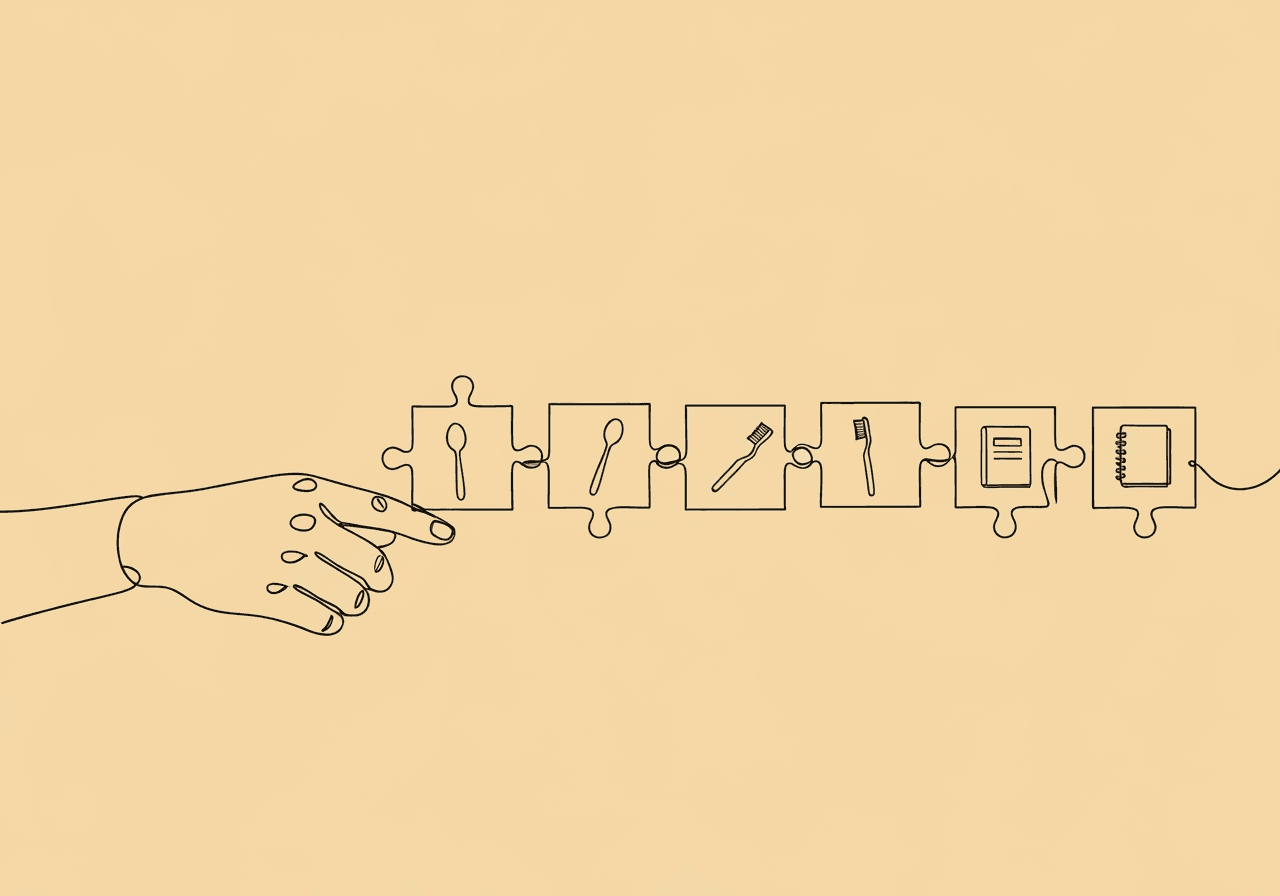
Task analysis breaks complex skills into smaller, teachable steps. It allows for targeted teaching and progress tracking. According to the Behavior Analyst Certification Board (BCBA Task List (5th ed.)), this method is core to skill acquisition in ABA. It supports behaviors from daily living to social interactions.
Why track every step? Studies show structured task analysis leads to significant improvements in skill acquisition compared to traditional methods. It offers consistency and clear outcomes. Research also indicates better generalization. Skills transfer more readily to new settings.
For RBTs, documenting each step ensures fidelity to the behavior intervention plan. It aligns with ethical standards and supports insurance compliance. Key benefits include:
- Spotting prompt needs early to fade support over time.
- Boosting learner confidence with small successes, like mastering one step at a time.
- Giving BCBAs solid data to tweak plans, such as adding more reinforcement for tough steps.
- Tracking long-term progress to show real-world application.
In practice, a task analysis for handwashing might include steps like turning on the faucet or rubbing soap. Each gets observed and noted during sessions.
The RBT's Role in RBT Task Analysis Documentation
As an RBT, you handle ABA interventions on the front lines. Accurate data collection is your main duty. The BACB RBT Task List (2nd ed., 2022) requires you to prepare and use data methods like task analysis. This measures client progress clearly.
Under BCBA guidance, you break down tasks and record performance live. Note independent completions, prompts, and responses. Consistent tracking of step mastery or prompt levels guides treatment choices. It also shows ethical practice under the BACB Ethics Code (2022, Section 2.12).
Session disruptions can happen. Use visual aids for steps and digital tools for fast notes. Research indicates substantial positive outcomes in ABA from strong RBT data collection. This includes gains in adaptive and social skills. For more, check our ABA Documentation Best Practices for RBTs. It covers ethical recording tips.
Your notes make treatments personal and effective. They directly aid client independence.
Documenting Forward Chaining in RBT Task Analysis Documentation
Forward chaining teaches steps one by one, from the start. You master each before moving on. This fits learners who benefit from the task's natural flow. In RBT Task Analysis documentation, target mastery per step. Record trials until independence. Clinical standards often use 80% success over sessions, as detailed in this analysis of mastery criteria in ABA research.
Here are the steps:
- Do the task analysis. List clear steps, like for dressing: Step 1 is pick up shirt.
- Teach the first step. Use prompts like verbal cues or modeling. Reinforce success. Log trials, such as "3 out of 5 independent on Step 1."
- Add the next step after mastery. Require the prior one independently. Note when criteria are met.
- Reduce prompts slowly. Record levels, from full physical to just verbal.
- Track each chance. Use a sheet for + (independent), P (prompted), or - (error).
For example, in forward chaining notes for handwashing: "Session 3: Step 1 (turn faucet) at 90% mastery. Started Step 2 (wet hands) with 2 out of 5 independent." This builds progressive records. The BACB stresses ongoing measurement for trustworthy results. See our guide to chaining techniques for RBTs for more examples.
Documenting Total Task Chaining and Prompt Levels in RBT Task Analysis Documentation
Total task chaining runs the full sequence each time. You prompt as needed across steps. This practice builds smooth performance. For RBT Task Analysis documentation, highlight total task data collection. Note prompt levels per step to show independence trends.
Steps to follow:
- Set up the full analysis. Outline steps, like for toothbrushing: wet brush, add toothpaste, brush, rinse.
- Run the chain. Begin the task. Use least-to-most prompts—visual, then verbal, physical—at each step.
- Log per step. Record type and result: "Step 1: Independent (+); Step 2: Verbal prompt (VP); Step 3: Partial physical (PP)."
- Reward the whole chain. Use praise or tokens. Note this to capture motivation.
- Cut prompts based on data. Aim for full independence. Track until 80% mastery across steps, per this ABA research on criteria.
Sample note: "Total task brushing: Step 1 +, Step 2 VP (1 trial), Step 3 PP (2 trials), ended with reinforcement." Studies show this works well for learners with basic skills. The BCBA Task List (5th ed., 2022) calls for clear prompt records to check fidelity. For billing tips, visit our RBT progress tracking tools.
Translating Task Analysis Data into Compliant Session Notes
Turn raw task analysis data into session notes that fit ABA rules. Formats like SOAP (Subjective, Objective, Assessment, Plan) or DAP work well. This meets insurance and BACB needs. Focus on facts, not feelings.
Organize first: Gather step results, prompts, and trends for the Objective part. Example: "Client did 4 out of 6 handwashing steps independently. Needed verbal prompts on Steps 3-4." In Assessment: "Up from 2 out of 6 last time. Ready to fade prompts." Plan: "Add Step 5 via forward chaining. Watch for 3 trials."
Stick to facts: Use numbers like "80% mastery on total task." Skip "did great." Say "Independent steps rose 33%." Digital templates help avoid mistakes.
The BACB Ethics Code (2022) requires notes within 24 hours and kept private. This aids audits and reports. It turns numbers into stories of advance.
BCBAs: Auditing Task Analysis Data Sheets for Quality
BCBAs guide RBT efforts. Auditing sheets checks data quality and treatment success. Begin with definitions: Ensure steps are precise to avoid confusion, per the BCBA Task List (5th ed., 2022).
Look for:
- Full coverage: Dates, times, signatures on all steps.
- True measures: Stick to facts, not "good effort." Check videos if possible.
- Steady records: Prompts and criteria match the plan, like 80% before fading.
- Goal links: Data shows trends for changes.
Issues like skipped details or loose notes need training fixes. Audits confirm if total task data collection aids choices, such as chain tweaks. The BACB requires this for ethical oversight. Verified data links to strong results in adaptive skills, with effect sizes around 0.42 per this meta-analysis on ABA interventions.
Do reviews monthly. They sharpen RBT skills and client gains. Explore our BCBA auditing checklist for templates.
Frequently Asked Questions
What is task analysis in ABA therapy and why track every step for RBTs?
Task analysis splits complex skills into sequential steps for ABA teaching. RBTs track each to spot issues, keep prompts steady, and gauge progress. This allows data-based changes and mastery. Per the BCBA Task List (5th ed., 2022), it leads to significant skill gains.
How does forward chaining differ from total task chaining in documentation?
Forward chaining notes focus on mastering early steps before next ones. It builds step-by-step independence. Total task data collection logs prompts over the whole chain each trial. It stresses full fluency. Both use sheets for +/P/- marks. Forward emphasizes sequence notes; total covers step-by-step support.
What are common challenges RBTs face in task analysis data collection?
RBTs face interruptions, uneven prompts, or too much data. Try visual aids and apps for instant logging. The BACB Ethics Code (2022) pushes training for fair records. This yields reliable data and substantial ABA benefits.
How can BCBAs ensure RBT task analysis sheets meet compliance standards?
BCBAs check definitions, timing, and data measures. Use lists to match the BACB Ethics Code (2022), adding trend notes. It cuts errors and aids billing. Quality data ties to solid results, like effect sizes up to 0.74 in IQ per this ABA meta-analysis.
What role do prompt levels play in total task data collection?
Record levels like verbal or physical per step. This tracks fading to independence. In total task chaining, it shows needs across the chain for tweaks. ABA research points to better generalization from steady tracking.
Task analysis is key in ABA. RBT Task Analysis documentation powers its impact. It enables exact, rule-following work that builds true independence. Review sheets against BACB rules now. Turn one session's data into notes today. Talk audits with your BCBA. These steps meet needs and help learners grow. Check Praxis Notes tools for easier RBT records.
Popular in ABA Session Notes & Tools
- 1
RBT Supervision Documentation: 2025 BACB Guide & Templates
6,5919 min read - 2
Master ABA Medical Necessity Documentation: Avoid Denials
4,2069 min read - 3
Master ABA SOAP Notes: Guide for RBTs & BCBAs
4,0099 min read - 4
ABA Documentation Best Practices for RBTs: Essential Tips
3,2995 min read - 5
Direct vs. Indirect RBT Supervision Documentation Guide
3,0487 min read
Popular in ABA Session Notes & Tools
- 1
RBT Supervision Documentation: 2025 BACB Guide & Templates
6,5919 min read - 2
Master ABA Medical Necessity Documentation: Avoid Denials
4,2069 min read - 3
Master ABA SOAP Notes: Guide for RBTs & BCBAs
4,0099 min read - 4
ABA Documentation Best Practices for RBTs: Essential Tips
3,2995 min read - 5
Direct vs. Indirect RBT Supervision Documentation Guide
3,0487 min read
Related Resources
Explore more helpful content on similar topics

IOA Documentation ABA: RBT Step-by-Step Guide
Master IOA documentation ABA with this RBT step-by-step guide. Learn calculations, observer prep, session notes, tips for low IOA, and BACB compliance for reliable data.

Direct vs. Indirect RBT Supervision Documentation Guide
Learn the key differences in Direct vs. Indirect RBT Supervision Documentation to meet BACB standards. Discover BCBA supervision log requirements, essential compliance tips, and best practices for effective RBT oversight.

RBT Supervision Documentation: 2025 BACB Guide & Templates
Master RBT supervision documentation with the 2025 BACB guide. Learn compliance rules, 5% supervision requirements, telehealth best practices, and free templates for audits and quality care. Download now!