
ABA Latency vs IRT: Essential Comparison Guide
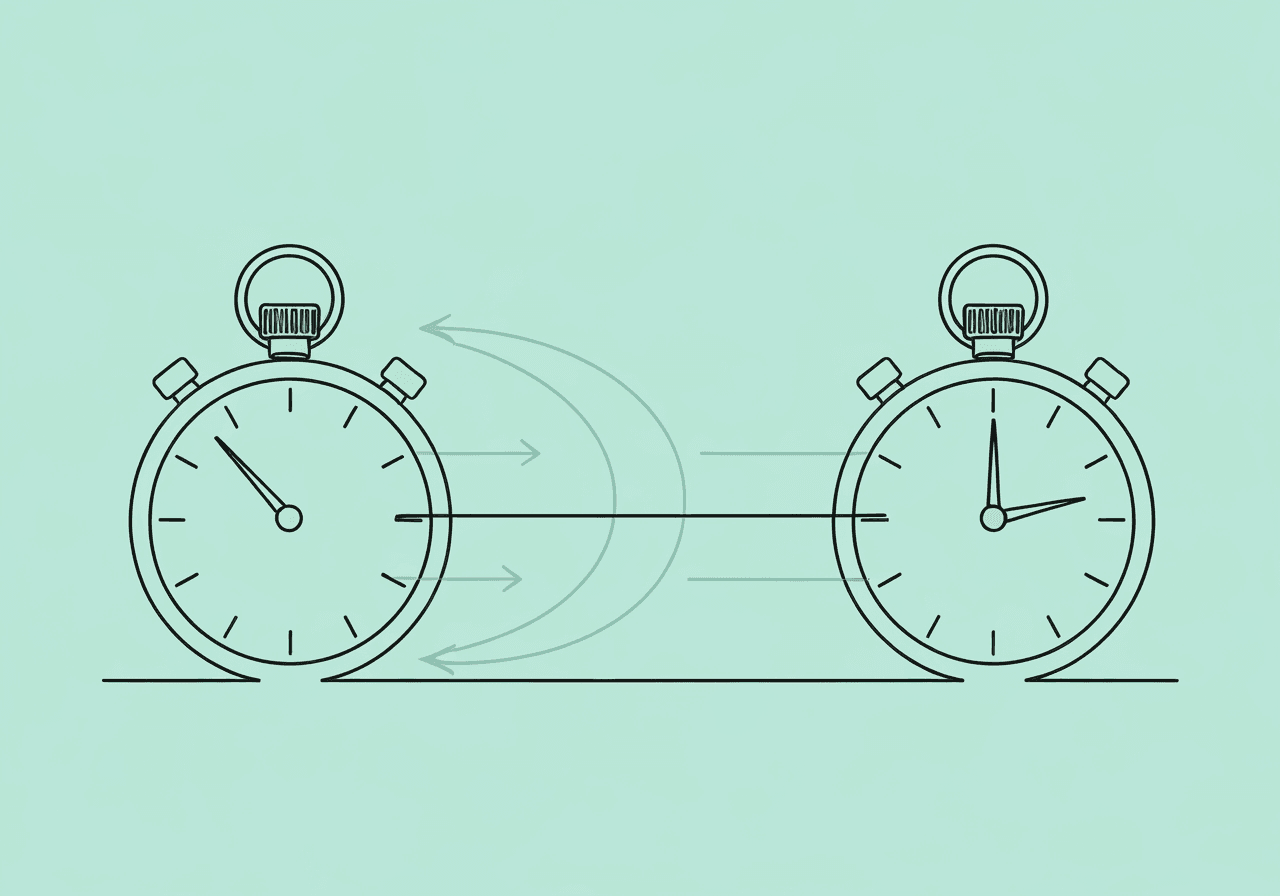
ABA therapy demands quick, accurate measurements to drive effective interventions. As RBTs and BCBAs handle session planning, grasping temporal dimensions of behavior proves vital for tracking progress and tweaking treatments. Comparing ABA latency vs IRT lets professionals spot nuances in how behaviors start and repeat. This ties directly to BACB's RBT Task List C-4 on continuous measurement. It's more than theory—it's a hands-on way to boost client results, cut waste, and make ethical choices based on solid data.
Picture a child who hesitates on instructions or repeats actions too fast. Picking the right metric highlights these issues. Here, you'll cover continuous measurement basics, definitions of latency and IRT, a direct comparison, clinical uses, documentation tips with pitfalls, and their place in treatment. You'll walk away with steps to weave these into your work.
Key Takeaways
- Latency tracks delays from a stimulus to behavior start, ideal for compliance checks.
- IRT measures gaps between repeated behaviors, key for pacing and repetition.
- Both enhance continuous measurement ABA documentation under BACB standards.
- Use latency for one-time responses; IRT for ongoing patterns.
- Proper application improves intervention fidelity and client outcomes.
Foundations of Continuous Measurement in ABA (C-4 Task List)
Continuous measurement in ABA means tracking behaviors in real time as they happen. It gives precise data for review. The BACB RBT Task List (2nd ed., 2022) lists Task C-4: measure temporal dimensions of behavior, like duration, latency, and interresponse time (IRT). Unlike sampling methods, this captures every moment for full continuous measurement ABA documentation.
These dimensions show not just what behaviors occur, but their timing and frequency. They guide fixes for skill building or cutting issues. BACB guidelines stress them for behaviors linked to stimuli or steps. Pros use them to gauge progress sharply, dodging fuzzy notes that mess up plans.
Research in the Journal of Applied Behavior Analysis shows continuous measurement boosts intervention fidelity. Studies point to significant improvements in skill-building outcomes when temporal data shapes changes (Evaluation and Program Development for Social Interventions). RBTs can start with stopwatches or apps, tuned to session needs.
Defining Latency in ABA
Latency gauges time from a discriminative stimulus (SD), like an instruction, to the target behavior's start. Say a therapist says "Sit down," and the learner moves after 10 seconds. That's 10-second latency. The BACB BCBA Task List (5th ed., 2022) defines it as focus on response onset. It spots delays in following rules or joining in.
In sessions, latency matters for behaviors needing fast starts, like school directions. Record it by timing from SD to behavior—straightforward but insightful. A temporal dimensions measurement guide from BehaviorPrep (2023) says latency flags issues like low drive or distractions early.
Quick latencies mean good response. Longer ones hint at prompt needs. RBTs apply this in discrete trial training to show real skills, free from outside sway.
Understanding Inter-Response Time (IRT) in ABA
Inter-Response Time (IRT) tracks time between one behavior's end and the next one's start in the same class. The BACB RBT Task List (2nd ed., 2022) covers it for back-to-back events, like hand-flaps or task finishes.
IRT shows speed of repeats—short for quick cycles, long for pauses. If a learner solves math with 30-second gaps, that's IRT. It adds depth beyond simple counts.
Time it from end to next start with digital tools for accuracy. IRT fits high-rate behaviors, tracking fluency or build-up without leaning only on frequency.
See our guide on ABA Continuous Measurement (Frequency, Duration) for more on related metrics.
ABA Latency vs IRT: Key Comparisons
ABA latency vs IRT differs in focus: latency on stimulus delays, IRT on response gaps. Both aid continuous measurement but meet varied needs. A continuous measurement overview from BTExamReview (2023) outlines this.
Check this table for clarity:
| Aspect | Latency | Inter-Response Time (IRT) |
|---|---|---|
| Measurement Focus | Time from SD (e.g., instruction) to behavior start | Time from end of one response to start of next |
| Typical Goal | Assess initiation speed and compliance | Evaluate pacing, frequency, or repetition rates |
| Documentation Example | "Instruction given at 10:00:05; response starts at 10:00:12 (7s latency)" | "First flap ends at 10:01:20; next starts at 10:01:45 (25s IRT)" |
| Best For | Instruction-following or skill onset | Stereotypy, chains, or high-rate behaviors |
| Tools Needed | Stopwatch from stimulus presentation | Stopwatch from response offset to next onset |
Adapted from BACB standards (2022), it shows latency for single events, IRT for flows. Wrong use, like IRT on isolates, twists data.
Learn RBT vs BCBA Documentation: Key ABA Differences for role-based fits.
When to Use ABA Latency vs IRT in Clinical Settings
Latency shines in compliance or direction-following to build self-reliance. For a child with autism slow on transitions, time from "Clean up" to action. It shows if prompts cut delays. A response latency analysis from Cross River Therapy (2023) says it aids fading aids for smoother sessions.
IRT suits repeats like stereotypy or tantrum timing. Longer IRTs mark wins in cutting self-harm via reinforcement. An IRT application guide from Heartlinks ABA (2023) notes it shapes fluency, like spacing speech replies.
Blend them in BIPs for chains: latency for starts, IRT for links. Pick by behavior type—discrete for latency, steady for IRT—for evidence-based picks.
Compare with Discontinuous Measurement Procedures for spot-check scenarios.
Documentation Best Practices and Common Pitfalls
Strong continuous measurement ABA documentation needs clear definitions: note SD for latency, class for IRT. Use tools like Praxis Notes for timed logs, HIPAA-safe. Check interobserver agreement often—aim for 90% reliability as a recommended standard in behavior analysis. Graph data weekly for trends. See the BACB Ethics Code for guidance (2020).
For latency, record exact times (e.g., "SD at 14:23:45; onset at 14:23:52"). For IRT, track sequences, not durations. An RBT task list resource from Optimus Education (2023) urges notes on context, like distractions.
Pitfalls? Reactivity boosts latencies. Mix IRT with counts sans time. Over-logging tires RBTs—stick to 3-5 trials. Debrief with BCBAs to fix habits that yield bad data. Common methodological issues in ABA stress this need (ABAI journals overview).
The Role of Latency and IRT in Data Collection and Treatment Planning
In RBT collection, latency and IRT give fine details for BCBA plans. Latency spots prompt reliance, aiding errorless methods. IRT uncovers reinforcement rules, like thinning for lasting wins. They back BACB's data focus, lifting BIP strength.
RBTs gain C-4 skills; BCBAs use patterns for probes. The BCBA Task List (5th ed., 2022) ties them to monitoring, cutting subjective views. They drive ethical, client-focused ABA with real results.
Frequently Asked Questions
How is latency different from interresponse time (IRT) in ABA?
Latency tracks delay from stimulus to onset. It suits response checks. IRT measures gaps between repeats. It eyes rates. BACB (2022) fits latency to cues, IRT to patterns (BACB RBT Task List).
What are the practical applications of measuring latency in ABA?
It aids skill gains, like cutting delays on steps. It finds drive blocks. Use prompts or rewards. A temporal dimensions guide from BehaviorPrep (2023) shows faster starts after fixes.
How can IRT improve learning outcomes in ABA therapy?
IRT spaces acts for fluency, like trials. It sets variable schedules for stick-to-it. An IRT resource from Cross River Therapy (2023) cuts problem rates, boosts focus.
What are common challenges when measuring temporal dimensions of behavior?
Distractions warp times. Fatigue hits accuracy. For IRT, define ends clearly. Training and reviews cut bias to 80-90% reliability.
How does understanding temporal dimensions improve behavior analysis?
They add timing beyond counts. Patterns guide sharp fixes. BACB (2022) says they boost data trust for ethical calls (BCBA Task List).
What strategies reduce latency in ABA sessions?
Visual aids or quick praise shorten waits. Fade as skills grow. Errorless teaching builds speed. A latency tracking form from Amaze ABA (2023) eyes 5-10 second gains.
Grasping ABA latency vs IRT arms you for precise, proof-based care. Fold them into continuous measurement, and RBTs supply data BCBAs shape into lively plans. This spurs client freedom. Accuracy comes from doing—check logs to BACB rules.
Next: Review a session for chances. Practice timing with a teammate. Ask your BCBA on BIP fits. Try ABA documentation tools at Praxis Notes. It hits C-4 and amps your role.
Popular in Behavior Analysis Concepts
- 1
ABA Graph Analysis Terms: Level, Trend, Variability
5,2256 min read - 2
Partial Interval vs Whole Interval vs MTS: ABA Guide
4,9686 min read - 3
Master IOA Formulas and Methods for Data Integrity
4,5728 min read - 4
Simple Schedules of Reinforcement ABA: FR, VR, FI, VI Guide
3,7226 min read - 5
Functional Behavior Assessment ABA: Complete 2025 Guide [Step-by-Step]
2,8376 min read
Popular in Behavior Analysis Concepts
- 1
ABA Graph Analysis Terms: Level, Trend, Variability
5,2256 min read - 2
Partial Interval vs Whole Interval vs MTS: ABA Guide
4,9686 min read - 3
Master IOA Formulas and Methods for Data Integrity
4,5728 min read - 4
Simple Schedules of Reinforcement ABA: FR, VR, FI, VI Guide
3,7226 min read - 5
Functional Behavior Assessment ABA: Complete 2025 Guide [Step-by-Step]
2,8376 min read
Related Resources
Explore more helpful content on similar topics
Frequency vs Duration ABA: Measurement Guide
Master frequency vs duration in ABA: perfect for tracking tantrums, aggressions, and on-task behavior. This BCBA guide empowers RBTs to select optimal measurement methods for precise data collection and compliance.
Data Stability vs Variability in ABA: A Guide for BCBAs
Discover data stability vs variability in ABA: essential for BCBAs and RBTs. Learn stable baseline criteria, manage high variability, and implement documentation strategies to drive effective interventions.

Master ABA Stimulus Equivalence: Derived Relations Guide
Master ABA stimulus equivalence and derived stimulus relations. Explore reflexivity, symmetry, transitivity, and equivalence classes to boost your ABA practice and promote effective generalization in behavior analysis.