ABA Morning Routine for Parents: Autism Strategies
Struggling with mornings? Master ABA morning routine strategies for parents. Visual schedules, chaining, rewards, data tracking & BCBA tips for autistic kids!

By Praxis Notes Team Editorial team
Published 5 min read
On this page
Why an ABA Morning Routine for Parents Matters for Autistic Children
Mornings often feel chaotic for families with autistic children. Unexpected changes can spark anxiety or meltdowns. The CDC notes about 1 in 31 eight-year-olds in the U.S. has autism spectrum disorder. That’s why an ABA morning routine for parents is key. It builds independence and cuts stress. It uses proven tools like visual aids and reinforcement for positive starts.
This guide uses ABA principles for home use. You’ll learn about consistency’s role. Get step-by-step tools like visual schedules and chaining. Discover transition tips, tracking sheets, and BCBA collaboration.
Key topics include:
- How routines boost skills and emotions.
- Visual breakdowns for wake-up to hygiene.
- Chaining and reinforcement for habits.
- Cues for smooth shifts.
- Data sheets for progress.
- Partnering with your BCBA.
Why Consistent ABA Morning Routines Matter for Autistic Children
Predictable routines give security to kids with autism. They often struggle with transitions and sensory input. Structure lowers anxiety. It also aids executive functioning skills, like planning and sequencing tasks, as explained in ABA support for executive functioning.
Autism morning routine strategies build independence too. They automate steps like dressing or breakfast. This cuts meltdowns and parental stress. A study shows routines protect mental health in NIH research on routines.
Parents see smoother days. Kids know what’s next. This frees energy for school or therapy. Long-term benefits include better independence and social skills.
ABA Morning Routine for Parents: Visual Schedules and Task Analysis
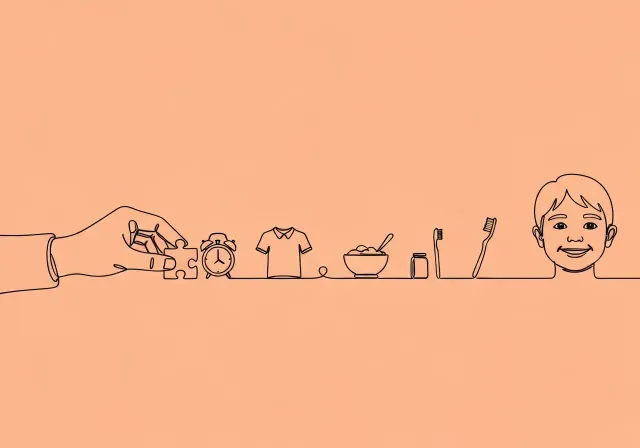
Visual schedules make mornings clear. They turn unknowns into steps. This is a top ABA daily routines home tool. List basics: wake-up, hygiene, dressing, breakfast. Use kid-friendly photos or icons on a wall chart or board.
Task analysis breaks tasks into small parts. It teaches through repetition, as ABA experts recommend. Here’s a full breakdown for brushing teeth:
- Pick up toothbrush.
- Squeeze toothpaste on bristles.
- Brush top teeth front and back.
- Brush bottom teeth front and back.
- Rinse mouth with water.
- Spit and put toothbrush away.
Apply this to dressing too:
- Choose clothes from options.
- Put on underwear.
- Pull on shirt arms first.
- Step into pants one leg at a time.
- Fasten buttons or zipper.
- Put on socks and shoes.
Sample 7-9 AM visual schedule:
| Time | Activity | Visual Prompt Example |
|---|---|---|
| 7:00 AM | Wake up & stretch | Bed icon to sun |
| 7:15 AM | Hygiene | Toothbrush sequence |
| 7:30 AM | Breakfast | Plate with choices |
| 8:00 AM | Dress | Clothes laid out |
| 8:30 AM | Pack & review | Backpack checklist |
Point to each step daily with your child. Practice builds familiarity. Free printables from ABA Journey help customize.
ABA Morning Routine for Parents: Chaining and Positive Reinforcement
Chaining links steps in sequences. Use forward chaining from start to end. Or try backward chaining from end to start. Backward works great for mornings. Do the last dressing step yourself first. Then guide earlier ones like picking clothes. Fade prompts slowly for independence.
Add positive reinforcement right after tasks. Give praise or rewards. Tokens earned at breakfast swap for a toy. ABA stresses this to build behaviors.
Here’s how to start:
- Begin by modeling the full chain. Narrate each part aloud.
- Next, offer verbal or physical prompts. Reduce them over weeks as skills grow.
- Reinforce right away with specifics like “Great job brushing all your teeth!”
- Track progress to tweak rewards.
Research backs this approach. See details on behavior chaining techniques. These fit ABA morning routine parents plans perfectly.
Learn more transitions in our ABA daily transition strategies at home.
How Transition Cues Build Momentum in Autism Morning Routines
Smooth transitions stop meltdowns. Use timers, songs, or cues like “five minutes till breakfast.” First-Then boards show: “First teeth, then play.” Predictability creates flow.
Add sensory breaks before hygiene. Try deep pressure hugs for calm. Prep clothes the night before. This skips tough choices. Keep weekends the same to hold gains.
ABA cues include:
- Visual timers like sand or apps for countdowns.
- Fun songs during dressing or cleanup.
- Choices like “Blue shirt or red?” to empower.
These autism morning routine strategies ease anxiety. They improve daily flow.
Simple Data Tracking for ABA Morning Routine Parents
Track without stress. Use a sheet for task completion, prompts, and reinforcers. This guides changes. Share it with your BCBA.
Sample log:
| Date | Task | Independent? (Y/N) | Prompts Used | Notes/Reinforcer |
|---|---|---|---|---|
| Wake up | ||||
| Hygiene | ||||
| Dress | ||||
| Breakfast | ||||
| Pack bag |
Check weekly averages. Look for patterns like low independence in one task. Adjust chaining there. Tools like ABA home observation logs make it easy.
Parents often see big gains. For example, dressing improves quickly with chaining. Your notes drive real change.
Collaborating with Your BCBA in ABA Morning Routines
Share logs with your BCBA for custom fixes. Hygiene resistance? Add favorite music. Meltdowns? Use ABC data to find triggers.
Fading support shifts from hand-over-hand to gestures, then nothing. Meet weekly to sync home and therapy.
Expert tips:
- Role-play challenges ahead.
- Tweak for sensory issues.
- Praise wins in front of others.
Research shows parent-BCBA teams work best. See NIH on parent involvement. This grows independence.
Frequently Asked Questions
How Do I Create a Visual Schedule for an ABA Morning Routine?
Start with pictures or icons for wake-up, dressing, breakfast, hygiene. Sequence them on a board or app. Review daily together. This builds familiarity and cuts anxiety. ABA Journey suggests using personal photos for better engagement. Involve your child to boost ownership.
What Sensory Activities Fit Autism Morning Routine Strategies?
Try deep breathing, fidget toys, or pressure hugs before tasks. These regulate input without breaks in flow. Eyas Landing recommends them for overload. They sharpen focus for hygiene or dressing.
How Does ABA Support Morning Routines at Home for Parents?
ABA brings visual schedules, timers, chaining, reinforcement. It teaches dressing, hygiene, transitions independently. Prompts fade over time. Blue Gems ABA customizes for home. Results last beyond therapy.
Why Keep ABA Daily Routines Home Consistent on Weekends?
Same wake times and steps offer security. They prevent skill loss. Autism Learning Partners says this holds emotional balance all week. Families stay calm.
How Can Positive Reinforcement Simplify Mornings?
Give praise, tokens, or choices right after tasks. Like a snack post-breakfast. It boosts completion per ABA rules. Strides ABA shares tips. Kids get motivated fast.
What If My Child Resists Brushing Teeth in the Routine?
Use task analysis and backward chaining. Pair with reinforcers. Prep visuals nightly. Magnet ABA offers sensory tweaks. Consult your BCBA if needed.
An ABA morning routine for parents turns chaos into confidence. CDC data backs the need. Studies show gains from structure. Use autism morning routine strategies like visuals, chaining, cues, tracking, collaboration.
Start simple. Pick one task. Make a visual. Log a week. Share data with BCBA. Prep nightly. ABA daily routines home create calmer homes. Kids gain skills. Your steady work pays off big.